Skip to content
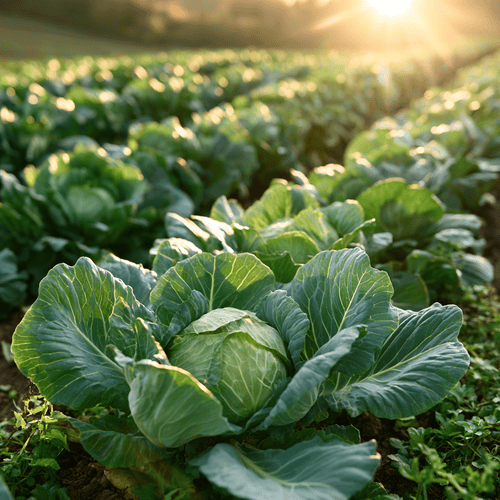
A close photo of cabbage
NewVegetablesLeafy vegetables

Cabbage

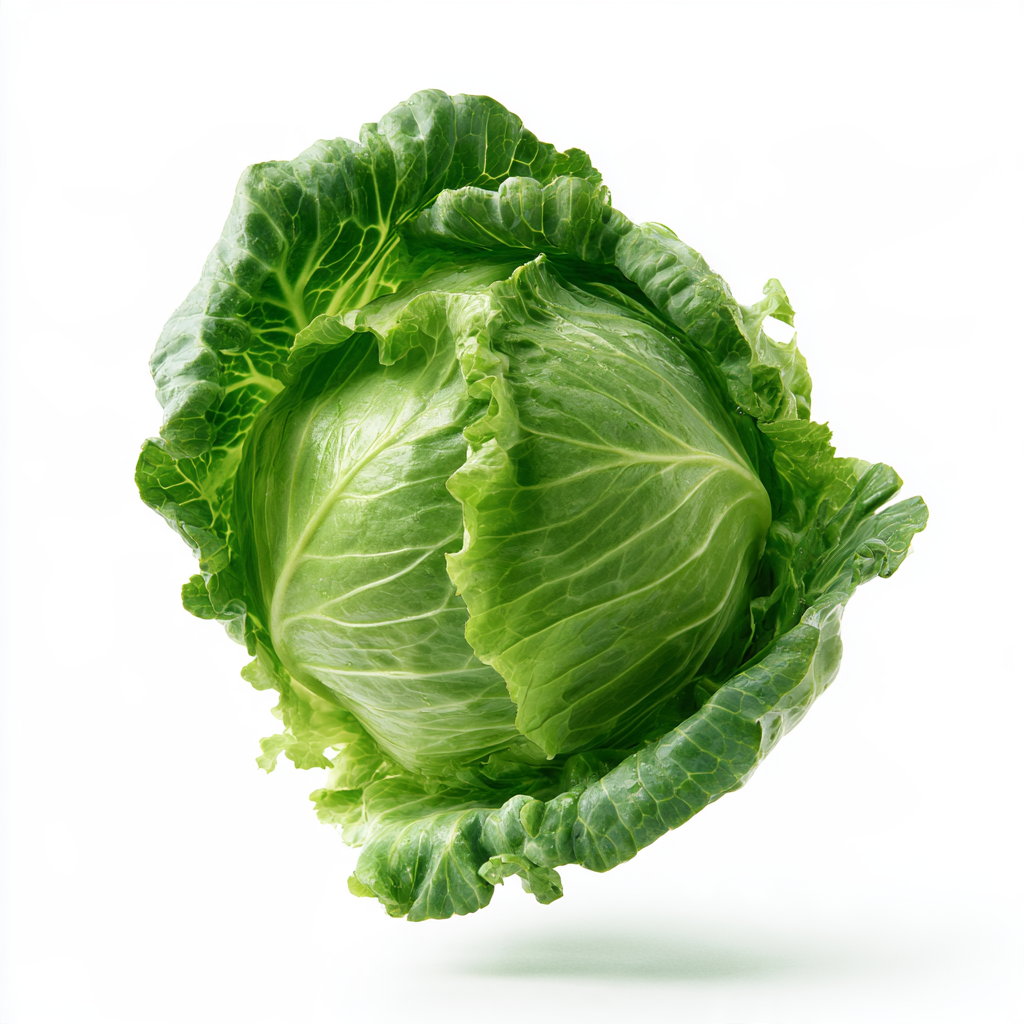
Cabbage is a cool-season leafy vegetable with a compact head of overlapping leaves and a mild, slightly sweet flavor. It can be eaten raw or cooked and provides vitamin C, vitamin K, fiber, and folate with few calories.

Did you know ?

  • 1 Cabbage, broccoli, cauliflower, kale, and Brussels sprouts are cultivars of Brassica oleracea.
  • 2 A cabbage head is made of tightly overlapping leaves around a short stem.
  • 3 Cabbage is harvested when its head is compact and firm.

View other Leafy vegetables

Nutrition

Detailed nutritional values of cabbage

Section titled “Detailed nutritional values of ”

Values of 100g of raw green cabbage :

Calories25 kcal
Proteins1.3g
Carbohydrates5.8g
of which sugars3.2g
Fiber2.5g
Fats0.1g

Vitamins and minerals

Main vitamins

Vitamin CVitamin KVitamin B9Vitamin A

Main minerals and trace elements

PotassiumManganesePhosphorusIron

Ripeness

How to know if cabbage is ripe ?

Section titled “How to know if is ripe ?”
Perfectly ripe cabbage

Perfectly ripe

Market-ready cabbage has a compact head of tight dark green buds, a firm stalk, and a fresh vegetal smell with no yellow flowers.

How to recognize this state :

  • Tight, compact florets
  • Deep green to blue-green color
  • Firm stalk that feels heavy for its size
  • No open yellow flowers
  • Fresh, mild cabbage-like aroma
  • Cut stem looks moist rather than dry
  • No slimy patches
  • Leaves, if attached, still look fresh

Selection

To choose quality cabbage at the supermarket or market :

  • Look for tight, compact florets with a deep green color
  • Choose heads that feel heavy and firm
  • Avoid yellow flowers, widespread yellowing, or limp stalks
  • Check the cut stem for freshness rather than dryness or browning
  • Prefer cabbage with no strong sulfur smell or excess moisture in the package

Storage and ripening

How to store and ripen cabbage ?

Section titled “How to store and ripen ?”

How to store cabbage ?

  • Keep cabbage cold in the refrigerator and use it as soon as possible for best quality.
  • Store it unwashed in a loose or perforated bag so moisture can escape while the head stays hydrated.
  • Keep it away from ethylene-producing fruits such as apples, pears, and bananas, which speed up yellowing.
  • If cut into florets, refrigerate in an airtight container and use within a few days.

How to ripen cabbage ?

Cabbage is harvested for freshness, not for post-harvest ripening. Here is how to keep it at its best :

  • Do not leave cabbage at room temperature to 'ripen' because quality declines quickly.
  • If the head is very immature from the garden, let it remain on the plant rather than trying to ripen it after harvest.
  • Use steaming, roasting, or stir-frying to bring out sweetness in firmer heads.

Health

  • Rich in vitamin C, which supports normal immune function
  • Provides vitamin K, important for normal blood clotting and bone health
  • Contains fiber that supports digestive health and satiety
  • Supplies folate, useful for cell growth and normal metabolism
  • Low in calories while contributing useful micronutrients

Origin

What is the origin of cabbage ?

Section titled “What is the origin of ?”

Origins of cabbage

Cabbage is a cultivated form of wild cabbage, Brassica oleracea, a species native to coastal western and southern Europe. It has long been grown in temperate regions and is now a widely used brassica vegetable.

Regions of origin

  • Coastal western and southern Europe
  • Temperate growing regions worldwide

Recipes

Cook cabbage according to its ripeness

Section titled “Cook according to its ripeness”

Unripe

  • Quick stir-fried baby cabbage
  • Tender cabbage and pea salad
  • Light cabbage soup

Perfectly ripe

  • Roasted cabbage with olive oil
  • Cabbage gratin
  • Steamed cabbage with lemon

Overripe

  • Creamy cabbage soup
  • Cabbage puree
  • Cabbage pasta sauce

Gallery

There is no images yet. Submit one now to contribute to the gallery !

Submit a picture

F.A.Q

Warnings

Warnings and precautions for cabbage

Section titled “Warnings and precautions for ”
  • Discard cabbage that is slimy, moldy, or foul-smelling
  • Wash thoroughly before eating to remove soil and debris
  • People taking anticoagulant medication should keep vitamin K intake consistent rather than changing it abruptly
  • Large amounts of cabbage may cause bloating or digestive discomfort in some people

Do not confuse with

Cauliflower

Closely related to cabbage but forms a dense pale head rather than green florets.

Cabbageni

A cabbage hybrid with smaller florets and longer, more tender stems.

Romanesco

A related brassica with pointed fractal heads and a slightly nuttier taste.