

Skip to content
New

About rhubarb

How to grow rhubarb

Everything you need to know to grow productive rhubarb plants at home, with big, juicy stalks year after year.

Growing

2-3 years

Difficulty

Easy

Cost

$$$$$$

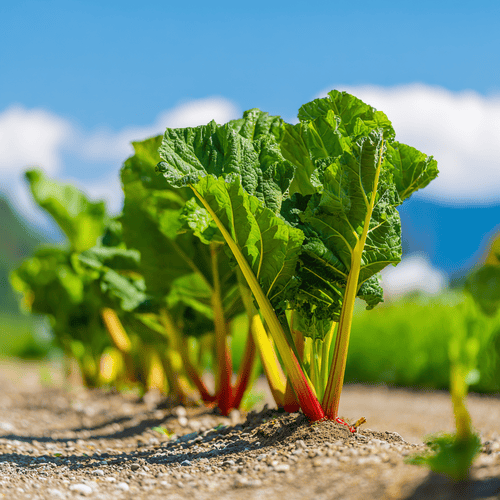
A close photo of rhubarb

Overview

Overview before growing rhubarb

Section titled “Overview before growing ”

Sunlight

Full sun for best yields, but light partial shade tolerated in hot summers.

Water

Regular, deep watering to keep soil consistently moist, especially in spring and early summer.

Temperature

Cool-temperate climates with cold winters and mild summers are ideal for strong crowns.

Spacing

Space plants about 3 ft (90 cm) apart in rows 3-4 ft (90-120 cm) apart so each crown can spread.

Cultivation time

Expect a light harvest in the second year and full picking from about the third year after planting a new crown or division.

Required climate

Rhubarb prefers a cool climate with winter chill, full sun, and deep, fertile, well-drained soil that retains moisture but does not become waterlogged.

Plantation yield

A mature, well-grown rhubarb crown can produce around 2-5 kg (4-12 lb) of stalks per season, and plants can stay productive for many years.

Pot cultivation

Choose a very large, deep container (at least 40-50 cm wide and deep) filled with rich, free-draining mix, keep it in a sunny spot, water and feed regularly, and protect the pot in winter in cold regions.

Growing requirements

What supplies do you need to grow rhubarb ?

Section titled “What supplies do you need to grow ?”
  • Healthy rhubarb crowns or divisions with several buds (eyes)
    Required
  • Deep, fertile, well-drained garden soil enriched with compost or well-rotted manure
    Required
  • Balanced, slow-release fertilizer or organic feed applied in early spring
    Required
  • Organic mulch (compost, straw, or leaf mold) to conserve moisture and suppress weeds
    Required
  • Large container (at least 40–50 cm deep and wide) with drainage holes for potted rhubarb
    Optional
  • Garden fork and sharp spade for planting, lifting, and dividing mature crowns
    Optional
  • Forcing pot, bucket, or tall container to force early, tender rhubarb stalks
    Optional
  • Gloves and pruning shears to remove dead leaves and flower stalks safely
    Optional
Planting

Plantation calendar

JAN
FEB
MAR
APR
MAY
JUN
JUL
AUG
SEP
OCT
NOV
DEC

Best time to plant

Still possible to plant

Not recommended

Planting rhubarb outside

  • 1Choose a permanent, sunny spot with deep, fertile, well-drained soil where the large clumps will not crowd other crops.
  • 2Dig a generous planting hole about 12 in (30 cm) deep and 18 in (45 cm) wide and mix in plenty of compost or well-rotted manure.
  • 3Place the crown so the buds sit about 1-2 in (2-5 cm) below soil level, spacing plants roughly 3 ft (90 cm) apart in each direction.
  • 4Backfill with amended soil, firm gently around the roots, and water thoroughly to settle the crown and remove air pockets.
  • 5Mulch around the plant to conserve moisture and suppress weeds, keeping mulch away from the crowns themselves.
  • 6Allow plants to establish by avoiding harvest in the first year, only taking a few stalks lightly in year two if growth is very strong.

Pro tip: Plant crowns while they are dormant in early spring or late autumn, and never bury them too deeply—shallow planting and rich, moisture-retentive soil help rhubarb establish quickly and resist rot.

Planting rhubarb inside

  • 1Select a very large, deep pot (at least 40–50 cm wide and deep) with ample drainage holes and fill it with a rich, free-draining mix blended with compost.
  • 2Set the crown in the center so that its growing point sits just below the surface, then backfill and firm the mix around the roots.
  • 3Water thoroughly after planting and place the container in a bright, sunny, sheltered location.
  • 4Top-dress with compost or slow-release fertilizer each spring and mulch the surface to keep roots cool and moist in warm weather.
  • 5Check moisture daily in spring and summer, watering whenever the top few centimeters of mix begin to dry out.
  • 6In cold climates, protect the container in winter by moving it to a sheltered, unheated space or insulating the pot so the crown does not freeze solid.

Pro tip: Rhubarb can thrive in containers if the pot is big enough and you water and feed consistently, but the roots are exposed to more cold and heat than in the ground, so extra winter protection and summer watering are essential.

Plant care

How to take care of rhubarb ?

Section titled “How to take care of ?”

Watering

Water deeply and regularly in spring and early summer, keeping the soil consistently moist but never waterlogged, and reduce watering as growth slows later in the season, especially on heavy soils that hold water.

Fertilizing

Feed rhubarb in early spring with a generous layer of compost or a balanced, slow-release fertilizer, then top up lightly after the main harvest to help crowns rebuild reserves, avoiding very high-nitrogen feeds that promote weak, sappy growth.

Pruning

Remove any flower stalks as soon as they appear to keep the plant’s energy focused on leaf stalks, and cut away old, damaged, or diseased leaves at the base throughout the season to improve airflow and reduce rot around the crown.

Harvesting

Time

Begin harvesting lightly from the second year after planting once plants are well established, then take regular pickings from spring to early summer in subsequent years, stopping by mid-summer to let crowns recover.

Signs

Stalks reach about 10-18 in (25-45 cm) long, feel firm and crisp, and pull cleanly from the crown; color varies by variety, so length and firmness are better guides than redness alone.

Harvest rhubarb by grasping a suitable stalk low down near the base, then gently pulling and twisting it away from the plant so it comes free at the crown; immediately trim off and discard the toxic leaves, take no more than about one-third to one-half of the stalks at a time from any plant, and avoid harvesting at all in the first year so crowns can build strength.

Problems & solutions

Common issues when growing rhubarb

Section titled “Common issues when growing ”

Crown and root rot

Crowns turn brown and mushy, new shoots fail or collapse, plants die back in wet soil.

Plant rhubarb in raised, well-drained soil, avoid waterlogged sites and very deep planting, improve drainage with organic matter, and remove and destroy badly rotted crowns before replanting into healthier ground.

Slugs, snails, and leaf damage

Holes and ragged edges on leaves, slime trails on or around plants.

Keep the area around crowns free of dense weeds and debris, use traps or barriers such as copper tape or organic pellets as needed, and remember that leaf damage rarely harms the edible stalks if plants remain generally vigorous.

Early flowering (bolting)

Tall flower stalks rising from the center of the plant, reduced leaf stalk production.

Choose varieties suited to your climate, keep plants evenly watered and mulched to reduce stress, divide and replant very old or crowded crowns, and promptly cut out any flower stems as they appear to keep harvests strong.

Weak growth and small stalks

Thin, short stalks and sparse foliage, plants failing to fill their space.

Improve soil fertility with compost or well-rotted manure, ensure full sun where possible, avoid over-harvesting (especially on young plants), and divide and replant old, congested crowns every few years to rejuvenate them.