

Skip to content
New

About tomatoes

How to grow tomatoes

Everything you need to know to grow productive tomato plants at home, even in a small garden, raised bed, or large pot.

Growing

60-90 days

Difficulty

Moderate

Cost

$$$$$$

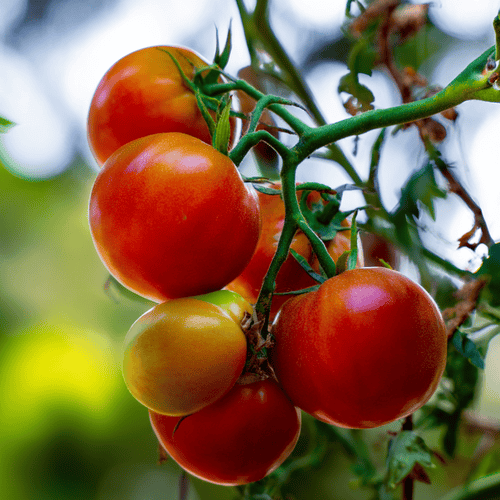
A close photo of tomatoes

Overview

Overview before growing tomatoes

Section titled “Overview before growing ”

Sunlight

At least 6-8 hours of direct sun per day for strong growth and good fruit set.

Water

Deep, regular watering to provide about 1-1.5 inches (2.5-4 cm) of water per week, keeping soil evenly moist.

Temperature

Warm-season crop that grows best between about 65-85°F (18-29°C) and cannot tolerate frost.

Spacing

Space plants 18-24 in (45-60 cm) apart, with rows or containers 24-36 in (60-90 cm) apart for airflow.

Cultivation time

Expect harvest in about 60-90 days after transplanting, depending on the variety and growing conditions.

Required climate

Tomatoes prefer a warm, frost-free climate with full sun, fertile, well-drained soil, and consistent moisture for steady, productive growth.

Plantation yield

Well-grown tomato plants can produce several kilograms of fruit each season, with indeterminate types bearing repeatedly if kept healthy and regularly picked.

Pot cultivation

Use a large container of at least 10-15 gallons (40-60 L) with rich, free-draining mix, full sun, regular watering and feeding, plus a sturdy stake or cage for support.

Growing requirements

What supplies do you need to grow tomatoes ?

Section titled “What supplies do you need to grow ?”
  • Tomato seeds or healthy young transplants of a suitable variety (bush or vine type)
    Required
  • Fertile, well-drained garden soil or high-quality vegetable potting mix
    Required
  • Balanced fertilizer or tomato feed with extra potassium for fruiting
    Required
  • Stakes, cages, or trellis plus soft ties to support growing plants
    Required
  • Mulch (straw, compost, or shredded bark) to conserve moisture and reduce splash
    Optional
  • Row cover or cloches to protect young plants from cool nights and early pests
    Optional
  • Pruning shears or clean scissors for removing suckers and damaged foliage
    Optional
  • pH test kit to keep soil slightly acidic to neutral (around 6.0-7.0)
    Optional
Planting

Plantation calendar

JAN
FEB
MAR
APR
MAY
JUN
JUL
AUG
SEP
OCT
NOV
DEC

Best time to plant

Still possible to plant

Not recommended

Planting tomatoes outside

  • 1Wait until all danger of frost has passed and the soil has warmed, then choose a sunny, sheltered spot with fertile, well-drained soil.
  • 2Incorporate compost or well-rotted manure into the top 8-12 in (20-30 cm) of soil and mark spacing for each plant.
  • 3Plant each seedling deeper than it grew in its pot, burying part of the stem so extra roots can form along it.
  • 4Firm soil gently around the base and water thoroughly to settle roots and remove air pockets.
  • 5Install a stake, cage, or trellis at planting time to avoid damaging roots later as plants grow.
  • 6Mulch once the soil is warm to help conserve moisture, prevent soil splash, and reduce weeds, keeping mulch slightly away from the stem.

Pro tip: Never rush tomatoes into cold soil—waiting for consistently warm nights and using supports at planting sets plants up for fewer problems and heavier crops.

Planting tomatoes inside

  • 1Choose a large pot or grow bag of at least 10-15 gallons (40-60 L) with ample drainage holes.
  • 2Fill with a rich, free-draining potting mix, then plant one strong tomato seedling per container, setting it deep so some of the stem is buried.
  • 3Water thoroughly after planting and place the container in the sunniest, warmest spot available, such as a south-facing patio or balcony.
  • 4Insert a stake or cage immediately and tie the main stem loosely as it grows to keep the plant upright and off the ground.
  • 5Check moisture daily, watering when the top 1-2 in (2-5 cm) of mix feel dry, and feed regularly with a tomato fertilizer once flowering begins.
  • 6In greenhouses or sheltered spaces, gently shake flowering trusses or tap supports on calm days to help pollination and fruit set.

Pro tip: Tomatoes in pots dry out quickly—use large containers, water deeply, and add a saucer or tray of water in heatwaves to keep moisture steadier and prevent blossom-end rot and splitting.

Plant care

How to take care of tomatoes ?

Section titled “How to take care of ?”

Watering

Water deeply and consistently, aiming for 1-2 inches of water per week, and focus on soaking the soil at the base in the morning while keeping foliage as dry as possible to reduce fungal diseases.

Fertilizing

Feed with a balanced fertilizer or tomato feed every 2-3 weeks during the growing season, then switch to a lower-nitrogen, higher-potassium formulation once flowering and fruiting are underway to support fruit quality instead of excess leaves.

Pruning

On indeterminate (vine) types, remove suckers that form between the main stem and side branches to improve airflow and concentrate energy on fruit, and trim lower leaves as plants grow taller to reduce soil splash and disease risk.

Harvesting

How to harvest tomatoes ?

Section titled “How to harvest ?”

Time

Most tomatoes are ready to pick about 60-90 days after transplanting, with early varieties ripening sooner and larger-fruited types taking longer.

Signs

Fruits are fully colored for their variety, feel firm but give slightly to gentle pressure, and detach easily from the truss when lifted or twisted.

Harvest tomatoes by cupping the fruit and either twisting gently or snipping with scissors so a short stem remains attached, pick regularly to encourage continued production, and store ripe fruits at room temperature for best flavor, refrigerating only when fully ripe and you need to extend their keeping time.

Problems & solutions

Common issues when growing tomatoes

Section titled “Common issues when growing ”

Blight (early or late)

Dark spots on leaves and stems, yellowing foliage, and brown, sunken patches on fruit.

Avoid wetting leaves, provide good spacing and airflow, remove and dispose of infected material promptly, rotate crops, and in high-risk areas use resistant varieties and, where allowed, protective fungicide sprays.

Blossom end rot

Dark, sunken, leathery patch at the blossom end of otherwise healthy-looking fruit.

Keep soil moisture consistent with deep, regular watering, avoid damaging roots, maintain even calcium levels in soil or mix, and do not over-fertilize with high-nitrogen feeds that can disrupt nutrient balance.

Aphids

Clusters of small green, black, or white insects on tender shoots and leaves, with sticky honeydew and distorted growth.

Spray aphids off with a strong jet of water, encourage beneficial insects like ladybirds and lacewings, and use insecticidal soap or horticultural oil on heavily infested plants if needed.

Tomato hornworms and caterpillars

Large chewed holes and missing leaf sections, droppings on leaves, and sometimes damage to green fruit.

Inspect plants regularly, hand-pick and remove large caterpillars, encourage natural predators and parasitic wasps, and use biological controls like Bacillus thuringiensis (Bt) when infestations are severe.