

Skip to content
New

About sweet potatoes

How to grow sweet potatoes

Everything you need to know to grow productive sweet potatoes at home, even in a small garden bed, raised bed, or grow bag.

Growing

90-120 days

Difficulty

Moderate

Cost

$$$$$$

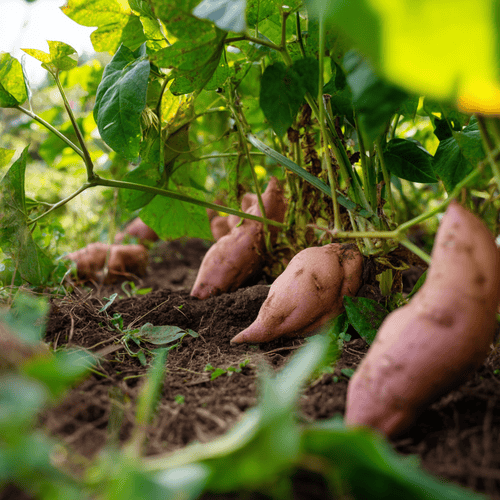
A close photo of sweet potatoes

Overview

Overview before growing sweet potatoes

Section titled “Overview before growing ”

Sunlight

At least 6-8 hours of direct sun per day in a warm, sheltered spot.

Water

Regular deep watering to keep soil evenly moist, especially during establishment and tuber bulking.

Temperature

Warm-season crop that needs frost-free conditions and soil above about 65°F (18°C) to thrive.

Spacing

Plant slips 12-18 in (30-45 cm) apart in rows 3-4 ft (90-120 cm) apart to give vines room to run.

Cultivation time

Expect harvest in roughly 90-120 days after planting rooted slips once soil is warm and frost risk has passed.

Required climate

Sweet potatoes prefer long, hot, frost-free seasons with full sun and loose, well-drained, slightly acidic to neutral soil that warms quickly in spring.

Plantation yield

With good care, each plant can produce several sizeable roots, and a small bed or a few grow bags can yield a generous crate of sweet potatoes for storage.

Pot cultivation

Use a large grow bag or container (at least 10-15 gallons/40-60 L) filled with light, free-draining mix, place in full sun, train or trim vines as needed, and keep watering and feeding regular for decent tuber size.

Growing requirements

What supplies do you need to grow sweet potatoes ?

Section titled “What supplies do you need to grow ?”
  • Healthy sweet potato slips or vine cuttings from disease-free stock
    Required
  • Loose, sandy or loamy, well-drained soil or a light vegetable potting mix
    Required
  • Compost or low-nitrogen, high-potassium fertilizer to enrich the planting bed
    Required
  • Hoe or trowel for making ridges, planting slips, and light weeding
    Required
  • Raised beds or ridges to improve drainage and warm the soil faster
    Optional
  • Mulch (straw, leaves, or black plastic) to conserve warmth and moisture
    Optional
  • Large grow bags or deep containers for small-space sweet potato production
    Optional
  • Row cover or fleece to protect young plants from cool nights and early pests
    Optional
Planting

How to plant sweet potatoes ?

Section titled “How to plant ?”

Plantation calendar

JAN
FEB
MAR
APR
MAY
JUN
JUL
AUG
SEP
OCT
NOV
DEC

Best time to plant

Still possible to plant

Not recommended

Planting sweet potatoes outside

  • 1Wait until all danger of frost has passed and the soil is warm, then prepare a sunny bed with loose, well-drained soil, forming low ridges or mounds if drainage is poor.
  • 2Mix compost or a low-nitrogen, high-potassium fertilizer into the top 6-8 in (15-20 cm) of soil where slips will be planted.
  • 3Plant each slip with 2-3 nodes buried and a couple of leaves above soil level, spacing them 12-18 in (30-45 cm) apart along the ridges.
  • 4Firm soil gently around each slip and water thoroughly to settle the roots and eliminate air pockets.
  • 5Mulch lightly after the soil has warmed to help retain moisture and suppress weeds without keeping the soil cold and soggy.
  • 6Guide or trim vigorous vines so they do not root too far from the main row if you want tubers concentrated near the planting line.

Pro tip: Warm soil is critical for sweet potatoes: wait until nights are consistently mild, use raised beds or black plastic to speed warming, and avoid over-fertilizing with nitrogen, which encourages leaves instead of tubers.

Planting sweet potatoes inside

  • 1Choose a large container or grow bag of at least 10-15 gallons (40-60 L) with plenty of drainage holes and place it where it will receive full sun.
  • 2Fill with a light, free-draining mix blended with compost, leaving a few inches of space at the top.
  • 3Plant 1-3 slips per container (depending on size), burying several nodes in the mix and spacing them evenly.
  • 4Water thoroughly after planting, then keep the mix consistently moist but not waterlogged as vines establish and spread.
  • 5Provide a trellis, frame, or space around the pot where vines can trail, trimming only where necessary to keep growth manageable.
  • 6Turn containers occasionally so all sides receive sun, and move them to the warmest, most sheltered spots to maximize the heat-loving crop.

Pro tip: In containers, root space and warmth limit yield: use the largest pot you can, keep watering and feeding steady, and place grow bags on warm surfaces like patios or gravel to boost soil temperature and tuber formation.

Plant care

How to take care of sweet potatoes ?

Section titled “How to take care of ?”

Watering

Water deeply and consistently so the soil stays evenly moist but never saturated, reducing frequency once vines are established yet ensuring regular moisture during the main tuber-bulking period for uniform, non-cracked roots.

Fertilizing

Incorporate compost or a balanced, low-nitrogen fertilizer before planting, then side-dress once or twice with a fertilizer higher in potassium mid-season to support root development without driving excessive leafy growth.

Pruning

Sweet potatoes do not need heavy pruning, but you can trim back overly long vines to keep them within bounds, remove damaged or diseased leaves, and lift vines occasionally to discourage them from rooting too far from the main planting row.

Harvesting

How to harvest sweet potatoes ?

Section titled “How to harvest ?”

Time

Most sweet potato varieties are ready to harvest about 90-120 days after planting slips, or when vines begin to yellow and growth slows in late summer to fall before frost.

Signs

Tubers have reached a good cooking size when a test hill shows firm, smooth-skinned roots, and the days-to-maturity window for your variety has passed without frost damage.

On a dry day, cut back the vines, then gently loosen soil with a fork or spade some distance from the row and lift plants carefully to avoid bruising or spearing the roots; dry tubers in shade, brush off loose soil, and cure them for 1-2 weeks in a warm, humid place before storing in a cool, dark, well-ventilated area for long keeping and improved sweetness.

Problems & solutions

Common issues when growing sweet potatoes

Section titled “Common issues when growing ”

Sweet potato weevils and borers

Small holes and tunnels in stems and roots, plants wilt or tubers show dark, bitter tunnels.

Use clean, certified slips, rotate crops away from previous sweet potato beds, destroy infested vines and roots, and use physical barriers or targeted biological controls in areas where weevils are common.

Wireworms and soil grubs

Narrow, round holes bored into tubers, making roots unattractive and prone to rot.

Avoid planting in ground that was recently in sod, grasses, or weedy pasture, harvest promptly when roots are mature, and encourage healthy soil life and birds that help reduce soil-dwelling pests.

Root rot and poor drainage

Blackened, mushy roots and stunted plants in heavy, waterlogged soils.

Plant in raised beds or ridges with well-drained, loose soil, avoid overwatering or frequent shallow watering, and never leave containers standing in saucers full of water.

Excess leaves, few tubers

Lush vine growth but small or very few roots at harvest.

Reduce nitrogen-rich fertilizers, ensure full sun, avoid overcrowding slips, and provide a long, warm growing season so plants shift energy from foliage to tuber production.