Skip to content
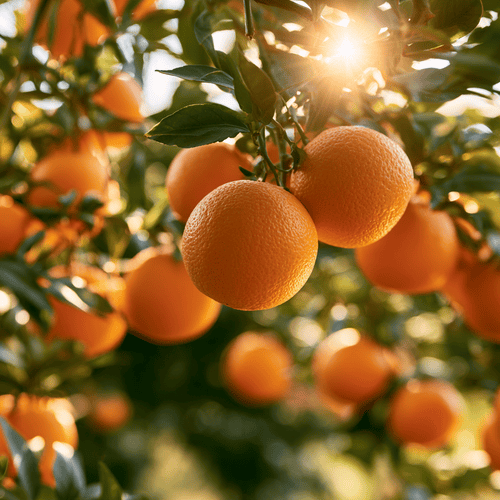
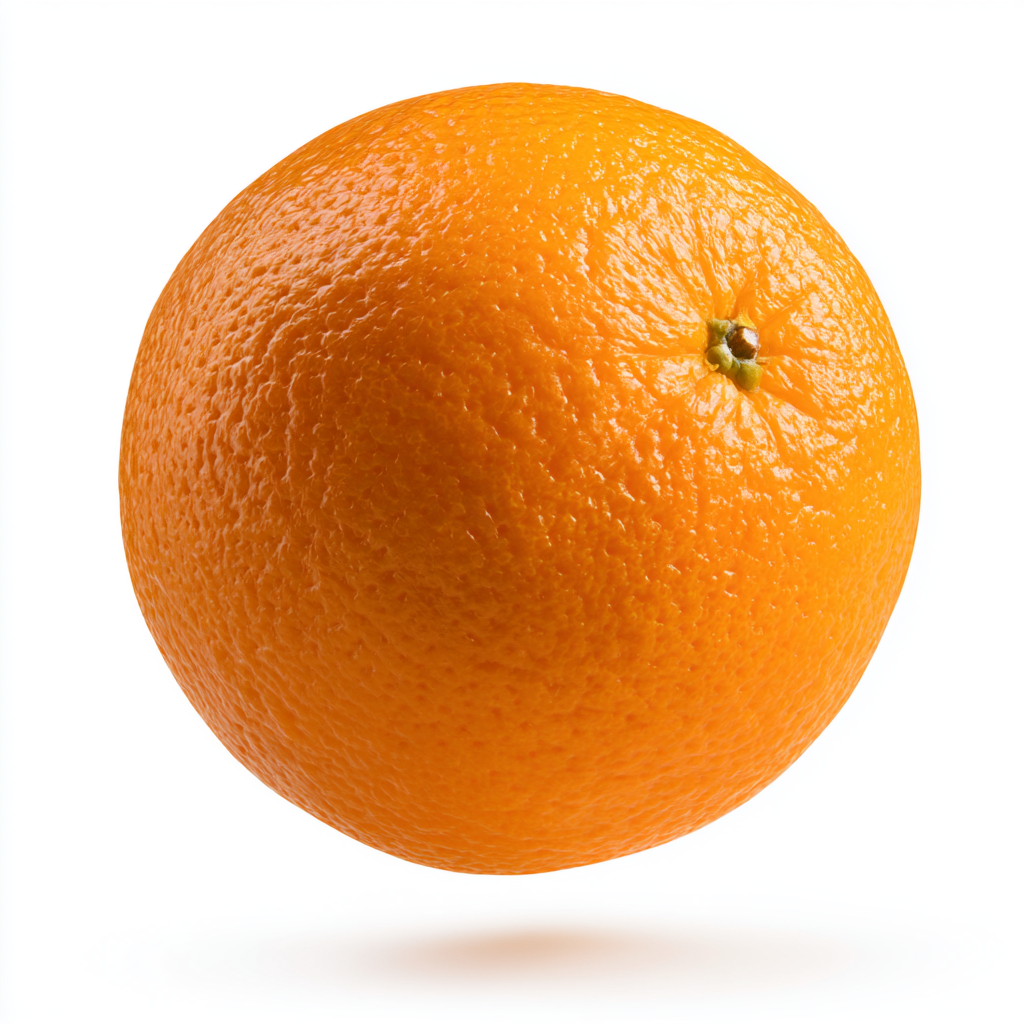
A close photo of an orange
NewFruitsCitrus fruits

Orange

The orange is a popular and versatile citrus fruit, valued for its juicy segments and bright sweet-tart flavour. Rich in vitamin C and fibre, oranges are enjoyed fresh, in cooking, and as juice around the world.

Did you know ?

  • 1 Sweet oranges are the most widely cultivated citrus fruit in the world.
  • 2 An orange is a berry in botanical terms.
  • 3 The fruit's fragrant peel contains aromatic oils used in cooking and perfumery.

View other Citrus fruits

Nutrition

Detailed nutritional values of oranges

Section titled “Detailed nutritional values of ”

Values of an average orange (~182g) - raw :

Calories95 kcal
Proteins0.5g
Carbohydrates25g
of which sugars19g
Fiber4g
Fats0.3g

Vitamins and minerals

Main vitamins

Vitamin AVitamin CVitamin KVitamin B6

Main minerals and trace elements

PotassiumManganeseMagnesiumPhosphorus

Ripeness

How to know if an orange is ripe ?

Section titled “How to know if is ripe ?”
A perfectly ripe orange

Perfectly ripe

Bright color characteristic of the variety, crisp, juicy, slightly soft to the touch, pleasant fruity aroma, balanced flavor between sweetness and acidity.

How to recognize this state :

  • Bright, vibrant color (red, yellow, or green depending on variety)
  • Firm but with slight give when gently squeezed
  • Juicy and crisp flesh
  • Pleasant, sweet aroma
  • Perfect balance between sweetness and acidity
  • Smooth skin without wrinkles or dents
  • Stem firmly attached
  • Dark brown seeds inside
  • Heavy for its size

Selection

To choose quality oranges at the supermarket or market :

  • Look for firm oranges with smooth, unblemished skin
  • Choose oranges that feel heavy for their size
  • Avoid oranges with bruises, cuts, or soft spots
  • Select oranges with a fresh, pleasant aroma
  • Consider the intended use (eating fresh vs. cooking) when choosing varieties

Storage and ripening

How to store and ripen oranges ?

Section titled “How to store and ripen ?”

How to store oranges ?

  • Store oranges in the refrigerator's crisper drawer to maintain freshness for up to 4-6 weeks.
  • Keep them separate from other fruits and vegetables, as oranges release ethylene gas which can speed up ripening in other produce.
  • For longer storage, wrap each orange in paper and keep in a cool, dark place like a cellar.

How to ripen oranges ?

If you bought unripe oranges, here's how to speed up the process :

  • Place oranges in a paper bag with a ripe banana or orange to speed up the process
  • Leave oranges at room temperature, away from direct sunlight, for a few days

Health

Health benefits of an orange

Section titled “Health benefits of ”
  • May help improve brain function and reduce the risk of neurodegenerative diseases
  • High in fiber, promoting digestive health and aiding weight management
  • Supports heart health by reducing cholesterol levels
  • Boosts immunity with vitamin C content
  • Rich in antioxidants that may lower risk of chronic diseases

Origin

What is the origin of oranges ?

Section titled “What is the origin of ?”

Origins of oranges

Sweet oranges originated in a region spanning southern China, northeastern India and Southeast Asia. They spread through trade to the Mediterranean and later to the Americas. Today, orange trees are grown in warm subtropical and tropical regions worldwide.

Regions of origin

  • Southern China and Southeast Asia
  • Northeastern India

Recipes

Cook an orange according to its ripeness

Section titled “Cook according to its ripeness”

Unripe

  • Tart orange chutney
  • Green orange slaw
  • Pickled oranges

Perfectly ripe

  • Caramel-dipped oranges
  • Classic orange pie
  • Fresh orange smoothie

Overripe

  • Homemade orangesauce
  • Spiced orange cake
  • Orange cinnamon muffins

Gallery

There is no images yet. Submit one now to contribute to the gallery !

Submit a picture

F.A.Q

Warnings

Warnings and precautions for oranges

Section titled “Warnings and precautions for ”
  • Wash oranges thoroughly to remove potential pesticide residues if not organic
  • Avoid consuming large quantities of orange seeds due to their cyanide content
  • Excessive consumption may cause digestive discomfort due to high fiber content
  • Discard oranges with mold, as some molds produce dangerous mycotoxins

Do not confuse with

Asian pear (Nashis)

Similar in shape to oranges but with a grainier texture and different flavor profile.

Quince

Resembles a large, lumpy orange but is much harder and cannot be eaten raw.

Craborange

Smaller than regular oranges and often too tart for fresh eating, typically used for jams or ornamental purposes.