

Skip to content

About strawberries

How to grow strawberries

Everything you need to know to grow productive strawberry plants at home, even in a small garden bed, planter, or balcony container.

Growing

4-6 months

Difficulty

Easy

Cost

$$$$$$

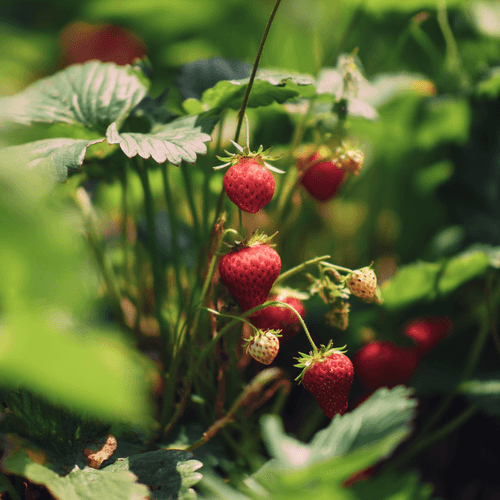
A close photo of strawberries

Overview

Overview before growing strawberries

Section titled “Overview before growing ”

Sunlight

At least 6-8 hours of direct sun per day to promote strong flowering and sweet fruit.

Water

About 1-1.5 inches (2.5-4 cm) of water per week, keeping soil consistently moist but never waterlogged.

Temperature

Best growth in cool to mild conditions around 60-80°F (15-27°C), with protection from extreme heat or frost.

Spacing

Space plants 10-18 in (25-45 cm) apart in rows 18-24 in (45-60 cm) apart for good airflow and runner growth.

Cultivation time

Expect the first harvest 4-6 months after planting healthy crowns or plants, with the heaviest crops usually in the second and third years.

Required climate

Strawberries prefer a temperate climate with cool winters, mild summers, full sun, and slightly acidic, well-drained soil.

Plantation yield

A well-cared-for strawberry plant can yield several hundred grams of fruit per season, and a small bed can provide generous bowls of berries over many weeks.

Pot cultivation

Grow in wide, shallow containers, grow bags, or hanging baskets with rich, free-draining mix, full sun, regular watering, and fresh plants or runners every few years.

Growing requirements

What supplies do you need to grow strawberries ?

Section titled “What supplies do you need to grow ?”
  • Certified disease-free strawberry crowns or young plants of suitable varieties
    Required
  • Well-drained, fertile soil or quality potting mix with added compost for containers
    Required
  • Balanced, slow-release or organic berry fertilizer for acid-loving plants
    Required
  • Straw, straw-like mulch, or similar material to keep fruit clean and protect plants
    Required
  • Raised beds, planters, or hanging baskets with good drainage for compact spaces
    Optional
  • Soaker hose or drip irrigation to water at the base and keep foliage dry
    Optional
  • Bird netting or cloches to protect ripening berries from birds and small animals
    Optional
  • Organic pest and disease controls for slugs, snails, gray mold, and leaf spots
    Optional
Planting

How to plant strawberries ?

Section titled “How to plant ?”

Plantation calendar

JAN
FEB
MAR
APR
MAY
JUN
JUL
AUG
SEP
OCT
NOV
DEC

Best time to plant

Still possible to plant

Not recommended

Planting strawberries outside

  • 1Choose a sunny, well-drained bed with slightly acidic soil and remove all weeds before planting.
  • 2Loosen the soil and mix in compost or well-rotted manure to create a fertile, crumbly planting zone.
  • 3Set each plant so the crown sits exactly at soil level, with roots spread out and just covered with soil.
  • 4Space plants in rows, firm the soil gently around the roots, and water thoroughly to settle them in.
  • 5Mulch between plants with clean straw or similar material to keep fruit off the soil and suppress weeds.
  • 6Protect early flowers from late frosts with fleece or covers so developing berries are not damaged.

Pro tip: Never bury the crown of strawberry plants and always start with weed-free, well-prepared soil so shallow roots can establish quickly and compete less with weeds.

Planting strawberries inside

  • 1Select compact or everbearing varieties and wide containers, troughs, or hanging baskets with plenty of drainage holes.
  • 2Fill with a light, free-draining potting mix enriched with compost, keeping it a few centimeters below the rim.
  • 3Plant strawberries with their crowns at the surface, spacing them so leaves are not crowded and air can circulate.
  • 4Water well after planting and place containers in full sun, turning them regularly so all plants get equal light.
  • 5Mulch the surface with straw or similar material to keep fruit clean and reduce evaporation from the potting mix.
  • 6Check moisture frequently, as containers dry out fast, and feed lightly through the season to support continuous flowering.

Pro tip: Container-grown strawberries need consistent moisture, regular feeding, and fresh plants or runners every few years to avoid tired, unproductive crowns.

Plant care

How to take care of strawberries ?

Section titled “How to take care of ?”

Watering

Water deeply and regularly, aiming for the equivalent of about 1-1.5 inches of water per week, using a soaker hose or watering at the base to keep leaves and fruit as dry as possible and reduce disease.

Fertilizing

Feed with a balanced or berry-specific fertilizer at planting and then lightly during the growing season, avoiding heavy nitrogen that encourages lush leaves at the expense of flowers and fruit.

Pruning

Remove most runners on productive plants to focus energy on bigger berries, clip off dead or diseased leaves during the season, and cut back old foliage after harvest to refresh the bed.

Harvesting

How to harvest strawberries ?

Section titled “How to harvest ?”

Time

Most strawberries are ready to pick about 4-6 weeks after flowering, with June-bearing types cropping heavily for a few weeks and day-neutral types fruiting on and off all season.

Signs

Berries are fully colored red (or variety-specific color) all over, glossy, aromatic, and slightly soft but still firm when gently squeezed.

Harvest strawberries on a cool, dry morning by picking every fully ripe berry with a small piece of stem attached, handle them gently to avoid bruising, and cool them quickly in a shallow container in the fridge or enjoy them as soon as possible after picking.

Problems & solutions

Common issues when growing strawberries

Section titled “Common issues when growing ”

Gray mold (Botrytis rot)

Brown, soft patches on berries that become covered in gray, fuzzy mold.

Pick and remove any damaged or overripe fruit promptly, space and thin plants for airflow, mulch to keep berries off wet soil, and if needed use approved fungicidal or organic sprays in persistently damp weather.

Leaf spots and powdery mildew

Small purple or brown spots on leaves, yellowing, or a white powdery coating on foliage.

Choose resistant varieties, avoid overhead watering in the evening, remove badly affected leaves, improve airflow, and apply suitable fungicides or organic treatments when disease pressure is high.

Slugs and snails

Irregular holes in fruit and leaves, slime trails, and half-eaten berries near the soil.

Use straw mulch or raised containers to lift fruit, hand-pick slugs at night, and apply barriers, traps, or wildlife-safe slug controls to reduce damage around beds and pots.

Bird damage

Ripe berries pecked, missing, or hanging in tatters on the plants.

Drape netting securely over plants before fruits begin to color, use visual deterrents where appropriate, and harvest berries promptly as they ripen so there’s less chance for birds to get them first.