

Skip to content

About raspberries

How to grow raspberries

Everything you need to know to grow productive raspberry canes at home, from small fences and beds to large rows or pots.

Growing

1-2 years

Difficulty

Moderate

Cost

$$$$$$

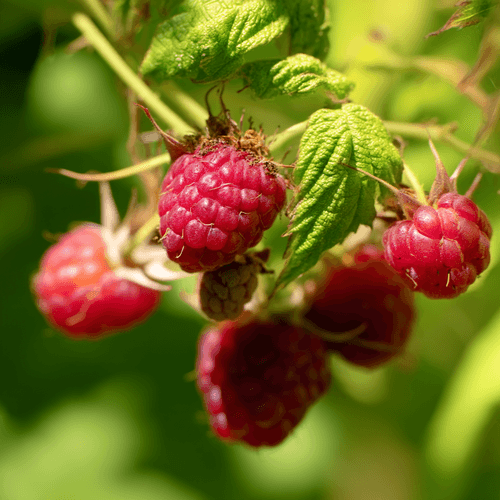
A close photo of raspberries

Overview

Overview before growing raspberries

Section titled “Overview before growing ”

Sunlight

At least 6-8 hours of sun per day in an open, sheltered spot for strong cane growth and fruiting.

Water

Around 1-2 inches (2.5-5 cm) of water per week, keeping soil moist but never waterlogged, especially during fruiting.

Temperature

Best growth in cool to mild climates around 60-80°F (15-27°C), with cold winters and moderate summers.

Spacing

Space canes 16-24 in (40-60 cm) apart with 5-6.5 ft (1.5-2 m) between rows or along a trellis or fence.

Cultivation time

Expect light crops in the first 1-2 years after planting, with full, heavy harvests usually from years 3-5 onward.

Required climate

Raspberries prefer a temperate climate with cold winters, mild summers, full sun, and moist but free-draining, slightly acidic soil.

Plantation yield

A mature raspberry plant can produce 1-2 quarts (several hundred grams) of berries per season, and a well-managed row can yield bowls of fruit over many weeks.

Pot cultivation

Grow compact raspberries in large containers with rich, free-draining mix, a sturdy trellis or fence, full sun, and careful watering and feeding.

Growing requirements

What supplies do you need to grow raspberries ?

Section titled “What supplies do you need to grow ?”
  • Healthy bare-root raspberry canes or potted plants of summer- or autumn-fruiting varieties
    Required
  • Moist but free-draining, fertile soil or quality potting mix enriched with compost
    Required
  • Strong posts and wires, trellis, or fence for supporting the canes
    Required
  • Organic mulch (compost, bark, or straw) to conserve moisture and suppress weeds
    Required
  • Balanced fertilizer for soft fruit or general-purpose fertilizer for yearly feeding
    Optional
  • Soaker hose or drip irrigation to water at the base and keep foliage dry
    Optional
  • pH test kit to keep soil slightly acidic to neutral, around 5.5–6.5
    Optional
  • Pruning shears and garden gloves for thinning and cutting back old canes
    Optional
Planting

How to plant raspberries ?

Section titled “How to plant ?”

Plantation calendar

JAN
FEB
MAR
APR
MAY
JUN
JUL
AUG
SEP
OCT
NOV
DEC

Best time to plant

Still possible to plant

Not recommended

Planting raspberries outside

  • 1Choose a sunny, open, but reasonably sheltered site with fertile, well-drained soil away from wild brambles and solanums.
  • 2Install a trellis or wire support system, then dig a shallow trench and enrich the soil with compost or well-rotted manure.
  • 3Set canes 16-24 in (40-60 cm) apart, spreading roots slightly and planting them at their original depth with the crown just below the surface.
  • 4Backfill with soil, firm gently to remove air pockets, and water thoroughly to settle the plants in.
  • 5Mulch along the row to keep roots cool and moist and to reduce weed competition around the shallow root system.
  • 6Tie new canes loosely to the support as they grow to keep them upright and make future pruning and harvesting easier.

Pro tip: Plant raspberries when soil is workable in late winter, spring, or mild autumn, and always give them a strong support system from the start so canes do not sprawl or snap in the wind.

Planting raspberries inside

  • 1Select compact or container-suitable raspberry varieties and large, deep pots or troughs with ample drainage holes.
  • 2Fill containers with a rich, free-draining mix blended with compost and a little grit for structure.
  • 3Plant canes at the same depth they grew in the nursery, spacing them so each has room to send up several new shoots.
  • 4Firm the mix gently around the roots, water thoroughly, and add a mulch layer on top to help retain moisture.
  • 5Place pots in full sun against a fence, wall, or mini-trellis and tie new canes to the support as they emerge.
  • 6Monitor moisture frequently, as pots dry out quickly, and refresh or replace plants every few years as clumps age and become less productive.

Pro tip: Container-grown raspberries need especially consistent watering and feeding, plus firm support and regular renewal of canes, to stay vigorous and productive in a small root space.

Plant care

How to take care of raspberries ?

Section titled “How to take care of ?”

Watering

Water deeply and consistently, providing about 1-2 inches of water per week, paying extra attention during flowering and fruiting so shallow roots never dry out completely or sit in soggy soil.

Fertilizing

Feed raspberries in early spring with a balanced fertilizer or compost, then top up lightly after flowering if growth is weak, avoiding excessive nitrogen that encourages tall, weak canes over strong, fruitful ones.

Pruning

For summer-fruiting types, remove all canes that have fruited at ground level after harvest and tie in strong new canes to replace them; for autumn-fruiting types, cut all canes down to near soil level in late winter for one big late-summer crop.

Harvesting

How to harvest raspberries ?

Section titled “How to harvest ?”

Time

Most raspberries are ready to harvest in early to late summer for summer-bearing types, and from late summer into autumn for fall-bearing types, once plantings have established and begun cropping in their second year.

Signs

Berries are fully colored all over, come away easily from the central plug when gently tugged, feel tender but not mushy, and taste sweet-tart when sampled.

Harvest raspberries on dry days by picking only fully ripe berries with a gentle pull so they slip off the receptacle into your hand, place them in shallow containers to avoid crushing, and cool or eat them as soon as possible because soft fruits do not store for long.

Problems & solutions

Common issues when growing raspberries

Section titled “Common issues when growing ”

Cane diseases (blight and dieback)

Dark, sunken lesions on canes, wilting tips, and dead or failing stems in the row.

Prune out and dispose of affected canes, avoid wounding stems in wet weather, keep rows narrow and well-aerated, and renew old plantings on fresh ground if cane diseases become persistent.

Raspberry beetle and maggots

Small holes and crumbly patches in berries, sometimes with tiny pale larvae inside the fruit.

Remove and destroy infested fruit, encourage birds and beneficial insects, time protective netting or organic sprays to the flowering period when adults are active, and avoid leaving fallen fruit on the ground.

Aphids and sap-sucking pests

Clusters of small insects on shoot tips and leaf undersides, curled leaves, sticky honeydew, and sooty mold.

Encourage ladybirds and other predators, wash small colonies off with water, and use insecticidal soap or horticultural oil on heavily infested shoots to reduce pest numbers and virus spread.

Root rot and waterlogging

Weak, yellowing canes that collapse in wet conditions, with poor growth and declining yields.

Improve drainage by planting on raised beds or ridges, avoid heavy, waterlogged soils, keep mulch away from the cane bases, and water less often but more deeply rather than little and often at the surface.