

Skip to content
New

About radishes

How to grow radishes

Everything you need to know to grow productive radishes at home, even in a small raised bed, border, or balcony container.

Growing

25-35 days

Difficulty

Easy

Cost

$$$$$$

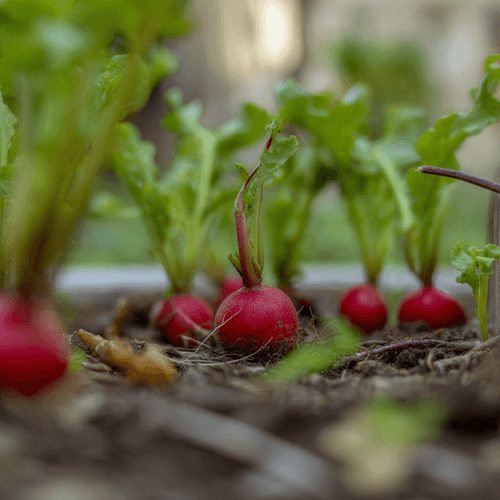
A close photo of radishes

Overview

Overview before growing radishes

Section titled “Overview before growing ”

Sunlight

At least 4-6 hours of direct sun per day, with light shade helpful in warm climates.

Water

Keep soil evenly moist with around 1 inch (2.5 cm) of water per week to avoid woody, hot roots.

Temperature

Cool weather around 50-70°F (10-21°C) is ideal; hot, dry conditions cause bolting and pithy roots.

Spacing

Sow seeds 1 in (2-3 cm) apart, then thin to 2-3 in (5-7 cm) apart in rows 6-8 in (15-20 cm) apart.

Cultivation time

Expect your first harvest about 25-35 days after sowing spring radishes, and slightly longer for larger or winter types.

Required climate

Radishes prefer a cool, moist, frost-tolerant season in spring and fall, loose fertile soil, and fast, steady growth rather than the intense heat of midsummer.

Plantation yield

Short rows sown little and often can supply a regular stream of crisp roots, with roughly several bunches per 3 m row under good conditions.

Pot cultivation

Use a shallow but wide container at least 6-8 in (15-20 cm) deep, filled with fine, stone-free mix, sow thinly, keep the surface moist, and thin promptly for plump, even roots.

Growing requirements

What supplies do you need to grow radishes ?

Section titled “What supplies do you need to grow ?”
  • Radish seeds suited to your season (spring, winter, or Asian types)
    Required
  • Loose, stone-free garden soil or fine-textured vegetable potting mix
    Required
  • Compost or a light, low-nitrogen fertilizer for root crops
    Required
  • Watering can with a fine rose or a gentle hose setting
    Required
  • Shallow raised bed or wide containers for intensive sowings
    Optional
  • Row covers or fleece to protect from flea beetles and early heat
    Optional
  • Hand rake or hoe to prepare a fine seedbed and control weeds
    Optional
  • Labels and a simple ruler or dibber to keep sowings well spaced
    Optional
Planting

Plantation calendar

JAN
FEB
MAR
APR
MAY
JUN
JUL
AUG
SEP
OCT
NOV
DEC

Best time to plant

Still possible to plant

Not recommended

Planting radishes outside

  • 1Prepare a sunny or lightly shaded bed by loosening the top 6-8 in (15-20 cm) of soil and removing stones and clods for straight roots.
  • 2Rake the surface to a fine tilth and lightly mix in compost or a low-nitrogen fertilizer.
  • 3Draw shallow drills about 0.25-0.5 in (0.5-1 cm) deep, spacing rows 6-8 in (15-20 cm) apart.
  • 4Sow seeds thinly along the row about 1 in (2-3 cm) apart, cover with fine soil, and firm gently.
  • 5Water with a soft spray to moisten the top layer without washing seeds away and keep the soil evenly moist until germination.
  • 6Thin seedlings early to 2-3 in (5-7 cm) apart so each radish has enough space to swell properly.

Pro tip: For the crispest roots, make small sowings every 1-2 weeks in cool weather instead of one large batch, and avoid sowing during very hot, dry spells when radishes tend to bolt and turn pithy.

Planting radishes inside

  • 1Fill a wide container at least 6-8 in (15-20 cm) deep with a loose, fine, free-draining vegetable mix.
  • 2Sow radish seeds thinly on the surface in rows or a grid, cover with about 0.25 in (0.5 cm) of mix, and firm lightly.
  • 3Water gently to settle the seeds and place the pot in a bright, cool position with several hours of sun each day.
  • 4Keep the top layer consistently moist until seedlings emerge, then water whenever the surface begins to dry.
  • 5Thin seedlings to 2-3 in (5-7 cm) apart as soon as they are large enough to handle, using thinnings as spicy microgreens.
  • 6Move or rotate containers if needed so they avoid intense midday heat but still receive good light in warm climates.

Pro tip: Radishes grow very fast in containers but also dry out quickly—shallow pots need frequent, even watering and prompt thinning for roots to swell before plants have a chance to bolt.

Plant care

How to take care of radishes ?

Section titled “How to take care of ?”

Watering

Water regularly to keep the soil lightly and evenly moist, providing about 1 inch of water per week and more in sandy soils, focusing irrigation at the base so plants grow fast and tender instead of slowing down and becoming hot or woody.

Fertilizing

Radishes have modest nutrient needs, so work compost or a light, low-nitrogen fertilizer into the soil before sowing, then only side-dress lightly if growth seems weak, avoiding rich manure or heavy nitrogen that encourages leaves at the expense of roots.

Pruning

Thin crowded seedlings early to the recommended spacing, and remove any yellowing or damaged outer leaves so the remaining plants have enough space, light, and airflow to develop plump, uniform roots.

Harvesting

How to harvest radishes ?

Section titled “How to harvest ?”

Time

Most spring radish varieties are ready to harvest about 25-35 days after sowing, while larger or winter types can take 40-70 days depending on the variety.

Signs

Bulbs push their shoulders slightly above the soil, feel firm and round when gently squeezed, are about 1 in (2.5 cm) across for salad types, and still have smooth, brightly colored skin.

Harvest radishes promptly by grasping the foliage at the base and pulling straight up, loosening the soil with a hand fork if needed; rinse off soil, twist off the leafy tops to prevent wilting, and store roots unwashed in the refrigerator for a few days to keep them crisp and mild.

Problems & solutions

Common issues when growing radishes

Section titled “Common issues when growing ”

Flea beetles

Tiny shot-hole damage speckling young leaves.

Protect seedlings under row covers, keep soil consistently moist to help plants outgrow damage, interplant with other crops, and use organic controls such as neem or insecticidal soap if infestations stay heavy.

Bolting and pithy roots

Plants send up flower stalks and roots become hot, hollow, or woody.

Sow radishes only in cool seasons, avoid heat and drought stress, keep growth fast with even watering, and harvest promptly once roots reach usable size instead of leaving them in the ground too long.

Poor root formation

Lots of leafy tops but tiny or no swollen roots.

Ensure full sun, sow more thinly and thin seedlings early, avoid high-nitrogen fertilizers and very compacted soil, and do not let plants dry out severely while young.

Cracked or misshapen radishes

Roots split, fork, or grow unevenly.

Keep soil moisture steady with mulch and regular watering, remove large stones and clods before sowing, and space plants correctly so roots are not forced to grow around obstacles or tight neighbors.