

Skip to content
New

About potatoes

How to grow potatoes

Everything you need to know to grow productive potato plants at home, even in a small garden bed, raised bed, or grow bag.

Growing

70-120 days

Difficulty

Easy

Cost

$$$$$$

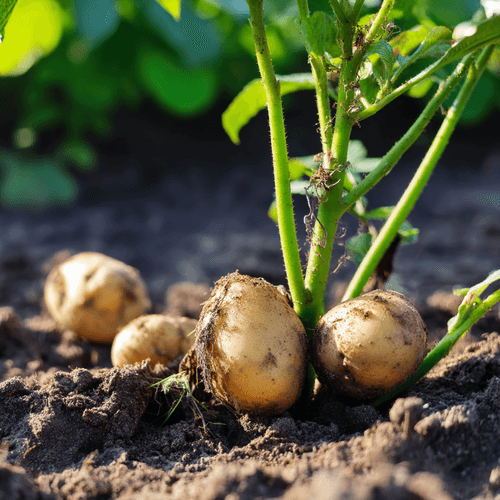
A close photo of potatoes

Overview

Overview before growing potatoes

Section titled “Overview before growing ”

Sunlight

At least 6-8 hours of direct sun per day for strong foliage and good tuber set.

Water

Around 1-1.5 inches (2.5-4 cm) of water per week, keeping soil evenly moist but never waterlogged.

Temperature

Cool, frost-free conditions around 60-70°F (15-21°C) are ideal, with tubers forming best in cool soil.

Spacing

Plant seed potatoes 10-12 in (25-30 cm) apart in rows 24-36 in (60-90 cm) apart, allowing room for hilling.

Cultivation time

Expect tender new potatoes from about 60-80 days after planting and full-size maincrop tubers in roughly 90-120 days, depending on variety.

Required climate

Potatoes prefer a cool, frost-free growing season with full sun and loose, deep, well-drained soil that is rich in organic matter but not freshly manured.

Plantation yield

Under good care, each plant can produce several times its planting weight in tubers, and a small bed or group of grow bags can supply many meals of home-grown potatoes.

Pot cultivation

Use a large container or grow bag with 10-12 in (25-30 cm) of compost at the base, then add more mix to hill the stems as they grow, keeping the pot in full sun with steady moisture.

Growing requirements

What supplies do you need to grow potatoes ?

Section titled “What supplies do you need to grow ?”
  • Certified disease-free seed potatoes of early, mid-season, or maincrop varieties
    Required
  • Loose, fertile, well-drained garden soil or quality vegetable compost for beds and containers
    Required
  • Compost or balanced, low-nitrogen fertilizer to enrich the soil before planting
    Required
  • Hoe or shovel for opening furrows and earthing up developing plants
    Required
  • Grow bags, large containers, or deep raised beds for growing in small spaces
    Optional
  • Straw or leaf mulch to help with hilling, moisture retention, and weed suppression
    Optional
  • Netting or row covers to protect young foliage from frost and early pests
    Optional
  • Garden fork for gently lifting potatoes at harvest without spearing tubers
    Optional
Planting

Plantation calendar

JAN
FEB
MAR
APR
MAY
JUN
JUL
AUG
SEP
OCT
NOV
DEC

Best time to plant

Still possible to plant

Not recommended

Planting potatoes outside

  • 1Chit seed potatoes in a cool, bright place for a couple of weeks so short, sturdy sprouts form before planting.
  • 2Prepare a sunny bed by loosening soil 8-12 in (20-30 cm) deep and mixing in compost or a balanced, low-nitrogen fertilizer.
  • 3Open furrows 4-6 in (10-15 cm) deep, then place seed pieces cut-side down with 1-3 healthy eyes each, spacing them 10-12 in (25-30 cm) apart.
  • 4Cover with 3-4 in (7-10 cm) of soil, water well, and label rows, leaving room on either side for future hilling.
  • 5When shoots reach about 4-6 in (10-15 cm) tall, pull soil or mulch up around the stems to cover most of the foliage and form ridges.
  • 6Repeat the earthing up process once or twice as plants grow to keep developing tubers covered and prevent them from greening.

Pro tip: Plant into warming soil a couple of weeks before your last frost date and start earthing up as soon as shoots appear—regular hilling protects tubers from light, frost, and improves yields.

Planting potatoes inside

  • 1Choose a deep container or grow bag of at least 10-15 gallons (40-60 L) with drainage holes.
  • 2Add 4-6 in (10-15 cm) of rich, free-draining compost to the bottom and place 2-3 seed potatoes evenly spaced on the surface.
  • 3Cover with another 4-6 in (10-15 cm) of mix, water thoroughly, and set the container in a sunny, sheltered spot.
  • 4As shoots grow to 4-6 in (10-15 cm) tall, add more compost or straw around the stems, leaving just the tips showing and repeat until the container is almost full.
  • 5Keep the compost evenly moist but not soggy, and turn the container occasionally so all sides receive good light.
  • 6Support tall foliage with canes or a simple string frame if needed so plants do not flop and shade each other excessively.

Pro tip: In containers, potatoes rely entirely on you for water and nutrients: consistent moisture, layered hilling, and regular feeding are the secrets to a heavy crop from a small footprint.

Plant care

How to take care of potatoes ?

Section titled “How to take care of ?”

Watering

Water deeply and consistently, aiming for around 1-1.5 inches of water per week, focusing irrigation at the base of the plants so the soil stays evenly moist during tuber formation while avoiding waterlogging that can cause rot.

Fertilizing

Feed with a balanced or slightly lower-nitrogen fertilizer once shoots are a few inches tall, then top up with compost or a high-potassium vegetable feed just before and during flowering to support strong foliage and good tuber bulking without too much leafy growth.

Pruning

Regularly hill or mulch around the stems instead of true pruning, and remove any yellowing, diseased, or blight-infected foliage promptly, also trimming back and supporting excessively floppy tops so they do not break or shade neighboring plants.

Harvesting

How to harvest potatoes ?

Section titled “How to harvest ?”

Time

You can begin lifting new potatoes about 60-90 days after planting, with maincrop storage potatoes usually ready around 90-120 days once foliage has fully yellowed and died back.

Signs

For new potatoes, plants are flowering and small tubers feel firm but thin-skinned when gently probed; for mature storage potatoes, foliage has turned yellow-brown and collapsed and the skins do not rub off easily when you scratch them.

For new potatoes, carefully dig around the base of the plant with your hands or a fork to lift just a few tubers at a time; for a full harvest, cut back dead tops, wait a week or two to set skins, then lift plants with a fork, working from the side to avoid spearing tubers, and cure sound potatoes in a cool, dark, airy place before long-term storage.

Problems & solutions

Common issues when growing potatoes

Section titled “Common issues when growing ”

Late blight

Dark, water-soaked spots on leaves and stems, followed by rapid collapse and brown, rotting tubers.

Remove and destroy infected foliage immediately, avoid overhead watering, grow resistant varieties where possible, practice crop rotation, and lift remaining tubers promptly if blight appears late in the season.

Colorado potato beetle

Yellow-and-black beetles and soft orange larvae skeletonizing leaves.

Hand-pick beetles and larvae regularly, check leaf undersides for yellow egg clusters, use floating row covers on young plants, and apply targeted biological or approved organic insect controls if infestations are heavy.

Scab and misshapen tubers

Rough, corky patches or scabs on potato skins, often on drier, limy soils.

Keep soil moisture more even during tuber formation, avoid fresh manure and excess lime before planting, choose scab-resistant varieties, and rotate potatoes with non-solanaceous crops to reduce disease levels.

Green or sunburned potatoes

Tubers develop green patches and a bitter taste where exposed to light.

Hill or mulch potatoes regularly to keep tubers covered, avoid shallow planting without follow-up earthing up, and discard any strongly green tubers instead of eating them.