

Skip to content

About peaches

How to grow peaches

Everything you need to know to grow productive peach trees at home, from small gardens and fences to patio pots.

Growing

3-5 years

Difficulty

Moderate

Cost

$$$$$$

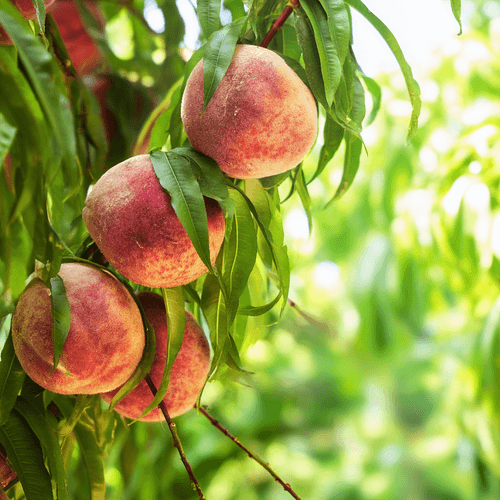
A close photo of peaches

Overview

Overview before growing peaches

Section titled “Overview before growing ”

Sunlight

At least 6-8 hours of direct sun per day in a warm, sheltered spot for good flowering and ripening.

Water

Regular deep watering, especially in the first years and during dry spells, aiming for about 1 inch (2.5 cm) of water per week.

Temperature

Best growth in temperate to warm climates with cold winters and warm summers around 65-85°F (18-29°C).

Spacing

Plant standard trees 12-18 ft (3.5-5.5 m) apart and dwarf trees 6-10 ft (2-3 m) apart for light and airflow.

Cultivation time

Expect the first real harvest about 3-5 years after planting a young grafted tree, with yields increasing as the tree reaches full bearing age.

Required climate

Peaches prefer a temperate climate with sufficient winter chill, full sun, and well-drained, moderately fertile soil with a pH around 6.0-7.0.

Plantation yield

A mature, well-cared-for peach tree can produce many dozens of fruits per season, giving generous baskets of peaches at peak harvest.

Pot cultivation

Choose a compact or dwarf variety in a very large container with rich, free-draining mix, full sun, regular watering and feeding, and winter frost protection.

Growing requirements

What supplies do you need to grow peaches ?

Section titled “What supplies do you need to grow ?”
  • Young grafted peach tree of a variety suited to your chill hours and climate
    Required
  • Fertile, well-drained loamy soil or high-quality fruit tree compost
    Required
  • Balanced slow-release fertilizer for fruit trees and organic matter such as compost or aged manure
    Required
  • Mulch (compost, bark, or straw) to conserve moisture and protect shallow roots
    Required
  • Sturdy stake and soft ties to support young or container-grown trees
    Optional
  • pH test kit to maintain soil in the ideal 6.0–7.0 range
    Optional
  • Sharp pruning tools for training, thinning, and removing dead or diseased wood
    Optional
  • Frost protection (fleece or covers) to shield early blossom from late spring frosts
    Optional
Planting

Plantation calendar

JAN
FEB
MAR
APR
MAY
JUN
JUL
AUG
SEP
OCT
NOV
DEC

Best time to plant

Still possible to plant

Not recommended

Planting peaches outside

  • 1Choose a sunny, frost-sheltered site with well-drained soil and enough room for the mature tree or fan-trained shape.
  • 2Dig a planting hole about twice as wide as the root ball and loosen the soil at the bottom and sides.
  • 3Position the tree so the graft union sits a few inches above soil level and the roots are spread naturally.
  • 4Backfill with native soil improved with compost, firming gently to remove air pockets around the roots.
  • 5Water deeply after planting and form a shallow basin to direct water toward the root zone.
  • 6Mulch around the root area, keeping mulch away from the trunk, and stake the tree if exposed to wind or trained as a fan.

Pro tip: Plant peaches while dormant in late winter or early spring, keeping the graft above soil level and choosing a site where early blossom can be easily protected from frost.

Planting peaches inside

  • 1Select a dwarf or patio peach variety and a very large container with ample drainage holes.
  • 2Fill the pot with a free-draining, rich fruit tree mix blended with compost and some grit for structure.
  • 3Place the tree so the graft union remains above the compost surface and the root ball sits level in the pot.
  • 4Backfill around the roots, firm gently, and water thoroughly to settle the compost and eliminate air pockets.
  • 5Position the container in full sun against a warm wall or sheltered spot and rotate it occasionally for even light.
  • 6Monitor moisture closely, especially in warm, windy weather, and refresh mulch each season to reduce evaporation.

Pro tip: Container-grown peaches dry out and exhaust nutrients quickly, so keep watering consistent, feed regularly, and move pots under cover when late frosts threaten blossom.

Plant care

How to take care of peaches ?

Section titled “How to take care of ?”

Watering

Water deeply and consistently, especially during the first 2-3 years and in dry spells, aiming for roughly 1 inch of water per week and focusing irrigation at the base to keep foliage and fruit as dry as possible.

Fertilizing

Feed in early spring with a balanced, slow-release fruit tree fertilizer and a layer of compost, then top up lightly after fruit set if growth is weak, avoiding excessive nitrogen that encourages leafy growth over flowers and fruit.

Pruning

Prune annually during late winter or very early spring to maintain an open-centered, airy canopy, remove dead, diseased, and crossing branches, and thin out crowded shoots to let light reach developing fruiting wood.

Harvesting

Time

Most peach varieties are ready to harvest from mid- to late summer, several years after planting once trees begin bearing regularly.

Signs

Fruit has full variety-specific background color (creamy-yellow rather than green), gives slightly under gentle pressure near the stem, and comes away easily with a light lift and twist.

Harvest peaches on a dry day by cupping each fruit in your hand and gently lifting and twisting so it detaches with the stem intact, handle them carefully to avoid bruises, and cool or use ripe fruit quickly as peaches are soft, highly perishable stone fruits.

Problems & solutions

Common issues when growing peaches

Section titled “Common issues when growing ”

Peach leaf curl

Red, blistered, and distorted leaves that thicken, curl, and often drop early.

Remove and destroy affected leaves, keep the area around the tree clean, choose resistant varieties where possible, and apply appropriate fungicidal sprays at leaf fall and before bud break in areas where the disease is common.

Brown rot on fruit and blossom

Brown, spreading rot on flowers and fruit, often covered with tan spore masses and causing mummified fruits.

Pick and destroy infected fruits, prune out cankered and diseased shoots, avoid overhead watering, and thin fruit so clusters are not touching, using suitable fungicides or organic controls if brown rot recurs frequently.

Aphids and scale insects

Sticky honeydew, curled leaves, small insects on shoots and undersides of leaves, and sooty mold.

Encourage beneficial insects, wash small colonies off with water, and use horticultural oil or insecticidal soap during the growing season or dormant oil sprays in winter to reduce populations.

Peach tree borer and trunk damage

Gumming and frass at the base of the trunk or lower branches, wilting shoots, and general decline.

Inspect trunks regularly, keep grass and weeds away from the base, avoid wounding the bark, and use recommended physical barriers or targeted biological or other approved controls where borers are a known problem.