

Skip to content
New

About lemons

How to grow lemons

Everything you need to know to grow productive lemon trees at home, even in a small garden or large pot.

Growing

3-5 years

Difficulty

Moderate

Cost

$$$$$$

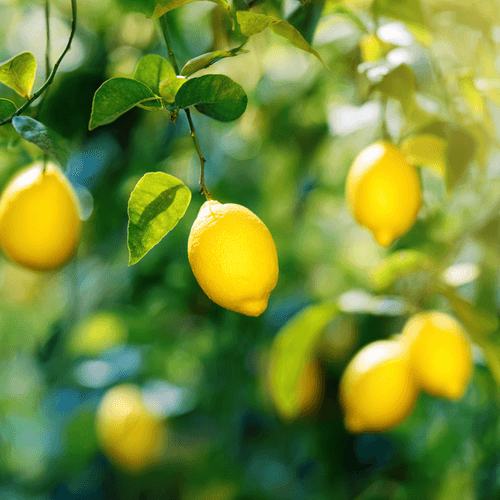
A close photo of lemons

Overview

Overview before growing lemons

Section titled “Overview before growing ”

Sunlight

At least 6-8 hours of direct sun per day in a warm, sheltered spot for good bloom and fruiting.

Water

Regular deep watering, keeping soil evenly moist but never waterlogged, letting the top inch dry slightly between waterings.

Temperature

Best growth in mild, frost-free or frost-protected climates around 65-85°F (18-29°C).

Spacing

Plant compact trees about 10-15 ft (3-4.5 m) apart, with dwarf or patio trees closer if kept pruned.

Cultivation time

Expect the first usable harvest about 3-5 years after planting a young grafted tree, with bigger crops as it matures.

Required climate

Lemons prefer a warm, sunny climate with minimal frost, fertile, well-drained, slightly acidic soil, and good air circulation.

Plantation yield

A mature, well-cared-for lemon tree can produce many dozens of fruits each year, with some varieties cropping almost year-round.

Pot cultivation

Choose a dwarf variety in a large container with citrus potting mix, full sun, good drainage, regular feeding, and winter protection in cool climates.

Growing requirements

What supplies do you need to grow lemons ?

Section titled “What supplies do you need to grow ?”
  • Young grafted lemon tree of a suitable variety (e.g. Meyer, Eureka, Lisbon)
    Required
  • Well-drained, slightly acidic loamy soil or citrus-specific potting mix
    Required
  • Balanced or citrus fertilizer formulated for lemons and other citrus
    Required
  • Mulch (compost, bark, or straw) to retain moisture and protect surface roots
    Required
  • Large container with drainage holes for patio or balcony-grown lemons
    Optional
  • Sturdy stake and soft ties to support young or top-heavy trees
    Optional
  • pH test kit to keep soil slightly acidic (around 5.5–6.5 for citrus)
    Optional
  • Organic pest controls and horticultural oil for common citrus pests like scale and leaf miners
    Optional
Planting

Plantation calendar

JAN
FEB
MAR
APR
MAY
JUN
JUL
AUG
SEP
OCT
NOV
DEC

Best time to plant

Still possible to plant

Not recommended

Planting lemons outside

  • 1Choose a sunny, sheltered location with well-drained soil and protection from cold winds and hard frost.
  • 2Remove weeds, then dig a planting hole about twice as wide as the root ball and loosen the soil at the bottom.
  • 3Position the tree so the graft union sits a few inches above soil level and the root flare is just at the surface.
  • 4Backfill with native soil mixed with compost, firming gently to remove air pockets around the roots.
  • 5Water deeply after planting and form a shallow basin to direct water toward the root zone.
  • 6Mulch around the drip line, keeping mulch away from the trunk, and stake the tree if it is exposed or top-heavy.

Pro tip: Plant after the danger of frost has passed, keep the graft union above soil level, and avoid low, frost-prone spots so young lemon trees are not damaged by cold.

Planting lemons inside

  • 1Select a dwarf lemon variety and a large, heavy container with plenty of drainage holes.
  • 2Fill the pot with a free-draining citrus potting mix or quality mix improved with grit and compost.
  • 3Set the tree in the center at its original soil level with the graft union above the surface.
  • 4Backfill around the root ball, firm gently, and water thoroughly to settle the mix and eliminate air pockets.
  • 5Place the container in full sun and turn it periodically so all sides of the tree receive even light.
  • 6Move the pot under cover or indoors before frost, and monitor moisture closely to avoid both waterlogging and drought.

Pro tip: Container-grown lemons dry out and cool down quickly, so ensure excellent drainage, consistent watering, and the option to move the tree indoors or to a sheltered spot during cold snaps.

Plant care

How to take care of lemons ?

Section titled “How to take care of ?”

Watering

Water deeply and consistently, allowing the top inch or so of soil to dry slightly between waterings but never letting the root zone stay soggy or bone dry for long periods, especially in hot weather and in pots.

Fertilizing

Feed regularly through spring and summer with a citrus or balanced fertilizer, following label rates and reducing feeding in fall and winter so growth can slow and harden off before cold weather.

Pruning

Prune lightly each year to remove dead, damaged, or crossing branches, open up the canopy for light and airflow, and cut off any suckers from below the graft so the tree’s energy goes into the productive top growth.

Harvesting

Time

Most lemon trees begin bearing 3-5 years after planting, with fruits often ready from late fall through spring depending on variety and climate.

Signs

Fruit has reached full size, the skin has turned a strong yellow (or variety-specific color), feels firm but not rock hard, and comes away with a gentle twist or cut.

Harvest lemons on a dry day by twisting them gently from the spur or cutting them with a bit of stem attached, pick only fully sized fruits you need, and store them in a cool place or on the tree where they can hang for some time without losing quality.

Problems & solutions

Common issues when growing lemons

Section titled “Common issues when growing ”

Citrus leaf miner

Silvery, winding trails in young leaves and distorted, curled foliage.

Avoid heavy pruning that stimulates soft flushes, protect new growth in peak leaf miner season with fine mesh or appropriate controls, and keep trees healthy so minor damage does not severely affect growth.

Scale insects

Small, rounded or shell-like bumps on stems and leaves with sticky honeydew and sooty mold.

Scrape or wipe off light infestations, prune heavily infested twigs, encourage natural predators, and use horticultural oil or insecticidal soap to smother remaining scale on branches and leaves.

Aphids

Clusters of soft insects on tender shoots and leaf undersides, causing curling and sticky residue.

Dislodge aphids with a strong jet of water, attract beneficial insects, and apply insecticidal soap or neem oil when populations are high and new growth is being distorted.

Root rot from poor drainage

Yellowing leaves, wilting, and dieback in trees growing in heavy, waterlogged soil or poorly drained pots.

Improve drainage by using well-draining citrus mix, containers with free-flowing holes, and raised beds or mounds; water deeply but less often, and never let lemons sit in standing water.