

Skip to content
New

About leeks

How to grow leeks

Everything you need to know to grow productive leeks at home, even in a small raised bed or deep container.

Growing

80-120 days

Difficulty

Moderate

Cost

$$$$$$

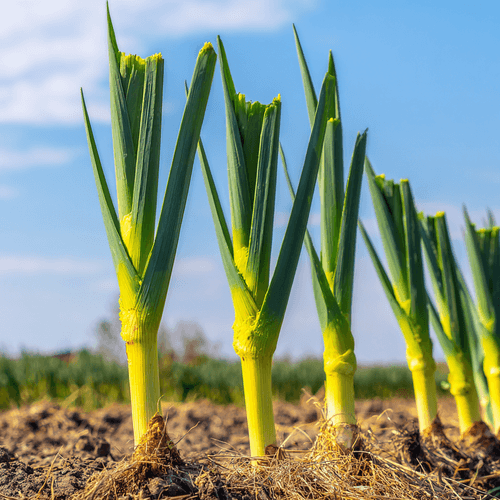
A close photo of leeks

Overview

Sunlight

At least 6 hours of direct sun per day, tolerating light shade in hot climates.

Water

Regular watering to keep soil consistently moist, especially while stems are thickening.

Temperature

Cool to mild conditions around 55-75°F (13-24°C), with mature leeks tolerating light frosts.

Spacing

Space final plants 6-8 in (15-20 cm) apart in rows 12 in (30 cm) apart for full-size leeks.

Cultivation time

Expect harvest from about 80-120 days after transplanting, or several months after sowing, depending on early, autumn, or winter varieties.

Required climate

Leeks prefer cool, moist conditions, deep fertile soil, and steady growth, making them ideal for autumn, winter, and early spring harvests in many climates.

Plantation yield

A well-planted row or bed of leeks can provide a steady supply of tender stems for many weeks, especially when you harvest gradually from late summer through winter.

Pot cultivation

Use a deep container with rich, moisture-retentive but free-draining mix, plant leeks closely for baby stems, keep them well-watered, and hill or sleeve the stems to blanch them.

Growing requirements

What supplies do you need to grow leeks ?

Section titled “What supplies do you need to grow ?”
  • Leek seeds or sturdy young transplants of suitable early, autumn, or winter varieties
    Required
  • Deep, fertile, well-drained soil or high-quality vegetable compost for beds and containers
    Required
  • Compost or balanced, low-nitrogen fertilizer to support steady vegetative growth
    Required
  • Organic mulch (straw, leaves, or compost) to conserve moisture and reduce weeds
    Required
  • Hand dibber or stake to make deep planting holes for long white shanks
    Optional
  • Garden fork or hoe for loosening soil, weeding, and gently lifting leeks at harvest
    Optional
  • Fleece, cloches, or tunnels for early sowings and to protect overwintering crops
    Optional
  • Fine mesh netting or row covers to limit onion fly, thrips, and other pests
    Optional
Planting

Plantation calendar

JAN
FEB
MAR
APR
MAY
JUN
JUL
AUG
SEP
OCT
NOV
DEC

Best time to plant

Still possible to plant

Not recommended

Planting leeks outside

  • 1Start seeds in a seedbed or trays in late winter to early spring, sowing thinly in shallow drills about 0.5 in (1 cm) deep.
  • 2Once seedlings are pencil-thick, prepare their final bed by loosening deep, fertile soil and raking it level.
  • 3Use a dibber or stake to make vertical holes 6-8 in (15-20 cm) deep and about 2 in (5 cm) wide, spaced 6-8 in (15-20 cm) apart in rows 12 in (30 cm) apart.
  • 4Trim leek roots and tops lightly if desired, drop one seedling into each hole, and water well to wash soil around the roots instead of filling the hole with soil.
  • 5Mulch between rows once plants are established to keep moisture even and reduce weed competition.
  • 6As stems thicken through the season, draw soil up around the shanks or add mulch to blanch them and lengthen the white portion.

Pro tip: Deep planting and gentle hilling later in the season are the keys to long, tender white stems—avoid firm backfilling when transplanting and let water and time pull soil around the leeks.

Planting leeks inside

  • 1Sow leek seeds in deep trays or modules filled with fine seed compost, covering lightly and keeping evenly moist in a bright, cool place.
  • 2Prick out or thin seedlings so each has space to reach pencil thickness before moving to a larger pot or outdoor bed.
  • 3For container crops, choose a deep pot, fill with rich vegetable mix, and plant leeks 3-4 in (8-10 cm) apart for baby stems or wider for larger leeks.
  • 4Water well after planting and place containers in full sun, protecting young plants from strong winds and extreme heat.
  • 5Top up with compost or slip cardboard tubes around stems during growth to blanch and protect the shanks from light.
  • 6Check moisture frequently, as pots dry out faster than beds, and feed lightly during the growing season to keep plants steadily growing.

Pro tip: When growing leeks in containers, depth and consistent moisture matter more than width—use deep pots, water regularly, and gradually blanch the stems for the sweetest, most tender harvests.

Plant care

Watering

Water deeply and consistently, especially while plants are establishing and during dry periods, aiming to keep the soil evenly moist but not saturated, and try to water at the base to avoid encouraging rust and other foliar diseases.

Fertilizing

Incorporate compost or a balanced, low-nitrogen fertilizer before planting, then side-dress once or twice in mid-season with compost or a light application of fertilizer to support steady leaf and stem growth without making plants too soft.

Pruning

Remove any yellowing, damaged, or diseased outer leaves as the season progresses, and thin overcrowded seedlings early so remaining leeks have room to thicken into straight, uniform stems.

Harvesting

Time

Most leeks are ready to harvest about 80-120 days after transplanting, with early varieties ready from late summer and main or winter types lifting from autumn through spring.

Signs

Leek stems are at least 1 in (2.5 cm) thick at the base, with firm, straight, pale shanks and healthy green leaves without extensive splitting or bolting.

Loosen soil beside the leek with a fork or hand tool, then gently lift and pull the plant by its leaves, shake or wash off soil, and trim roots and any tough or damaged outer leaves; harvest alternate plants along the row first for baby leeks, leaving the rest to thicken for later use.

Problems & solutions

Common issues when growing leeks

Section titled “Common issues when growing ”

Leek rust and leaf spots

Orange pustules or discolored patches on leaves, leading to early dieback.

Choose resistant varieties where possible, avoid overhead watering, give plants generous spacing and airflow, remove badly affected leaves, and rotate allium crops to reduce disease pressure in the soil.

Thrips and onion fly

Silvery streaks, distorted leaves, or maggot damage in stems and roots.

Use fine mesh or row covers over crops, encourage beneficial insects, keep plants well-watered and unstressed, and remove and destroy heavily infested plants to limit the spread of pests.

Slow growth and thin stems

Leeks remain small, spindly, or fail to thicken even after many weeks.

Plant into fertile, deeply prepared soil, avoid heavy competition from weeds, water regularly, feed lightly mid-season, and ensure correct spacing so each leek has enough room and resources to bulk up.

Bolting (premature flowering)

Tall flower stalks emerging from the center of the plant, making stems tough.

Avoid exposing young plants to prolonged cold after sowing or transplanting, choose bolt-resistant varieties, and harvest any leeks that start to form flower stalks promptly for best possible eating quality.