

Skip to content

About kiwis

How to grow kiwis

Everything you need to know to grow productive kiwi vines at home, even in a small garden with a sturdy trellis or large pot.

Growing

3-5 years

Difficulty

Moderate

Cost

$$$$$$

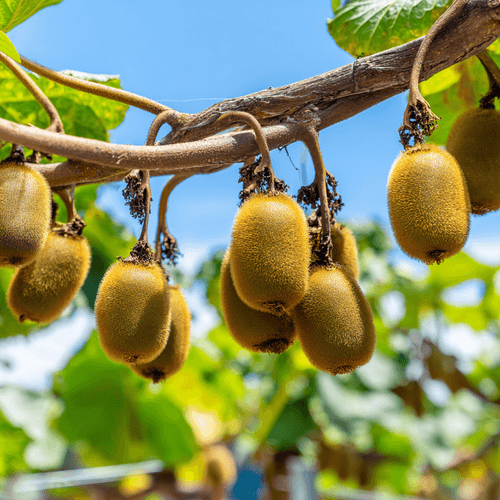
A close photo of kiwis

Overview

Sunlight

At least 6-8 hours of sun per day in a warm, sheltered, frost-free or frost-protected spot.

Water

Consistent deep watering, keeping soil evenly moist but never waterlogged, especially in summer and early years.

Temperature

Best growth in mild climates with cool winters and long, warm, frost-free growing seasons around 60-80°F (15-27°C).

Spacing

Plant vines 10-15 ft (3-4.5 m) apart along a strong trellis or support for good airflow and light.

Cultivation time

Expect the first harvest about 3-5 years after planting well-cared-for vines, with crops increasing as the framework fills the trellis.

Required climate

Kiwis prefer a temperate to warm climate with winter chill for some varieties, fertile, well-drained, slightly acidic soil, and protection from strong winds.

Plantation yield

A mature, well-managed kiwi vine can produce many kilograms of fruit each season once established on a sturdy trellis.

Pot cultivation

Choose a compact or self-fertile variety in a large, heavy container with rich, free-draining mix, full sun, strong support, and careful watering and feeding.

Growing requirements

What supplies do you need to grow kiwis ?

Section titled “What supplies do you need to grow ?”
  • Healthy kiwi vine (female plus male pollinator or self-fertile variety)
    Required
  • Deep, well-drained, slightly acidic loamy soil or quality fruiting potting mix
    Required
  • Strong trellis, arbor, or wire support system to carry vigorous vines
    Required
  • Organic matter such as compost or well-rotted manure to enrich the planting area
    Required
  • Balanced fertilizer with extra nitrogen in spring and potassium as fruit develops
    Optional
  • Mulch (compost, straw, or bark) to conserve moisture and reduce weeds
    Optional
  • pH test kit to keep soil slightly acidic (around 5.5–6.5)
    Optional
  • Sharp secateurs and ties for pruning and training shoots along the support
    Optional
Planting

Plantation calendar

JAN
FEB
MAR
APR
MAY
JUN
JUL
AUG
SEP
OCT
NOV
DEC

Best time to plant

Still possible to plant

Not recommended

Planting kiwis outside

  • 1Install a strong trellis, pergola, or wire support in a sunny, sheltered site with well-drained soil.
  • 2Clear weeds and dig a generous planting hole, mixing in compost or well-rotted manure with the native soil.
  • 3Set the vine at the same depth it grew in the nursery pot, spreading roots out evenly in the hole.
  • 4Backfill with enriched soil, firm gently to remove air pockets, and water deeply to settle the roots.
  • 5Mulch around the base, keeping mulch a little away from the stem, and tie the main shoot to the support.
  • 6Space additional vines along the trellis so male and female or self-fertile plants can be trained and pollinated effectively.

Pro tip: Plant kiwis when soil is workable in spring or mild autumn, always in a frost-free window, and put the support in place first so you do not damage roots later.

Planting kiwis inside

  • 1Choose a compact or self-fertile kiwi and a large, heavy container with several drainage holes and a built-in trellis or strong stake.
  • 2Fill the pot with a rich, free-draining mix blended with compost, leaving room at the top for watering.
  • 3Position the vine in the center at its original depth, gently loosening circling roots if pot-bound.
  • 4Backfill and firm the mix lightly, then water thoroughly so the medium settles around the roots.
  • 5Place the container in full sun in a warm, sheltered spot and begin training the main stem up the support.
  • 6Check moisture frequently and add mulch on top of the soil to reduce drying out in hot, windy weather.

Pro tip: Container-grown kiwis dry out quickly and roots are sensitive, so avoid extremes: keep the mix evenly moist, protect pots from freezing, and repot into larger containers as vines grow.

Plant care

Watering

Water deeply and regularly during the growing season, especially in the first 2-3 years and while fruit is swelling, keeping the soil consistently moist but never sodden to avoid root rot.

Fertilizing

Feed in early spring with a balanced fertilizer, then make light top-up applications during vigorous growth, easing back late in the season so new shoots can harden before winter.

Pruning

Train a permanent framework along the trellis and prune in late winter plus light summer trims, removing tangled, weak, or overcrowded shoots and shortening fruiting laterals to keep the canopy open and productive.

Harvesting

Time

Most kiwi vines start cropping about 3-5 years after planting, with fruits usually ready from late autumn after a long, warm growing season.

Signs

Fruit reaches full size for the variety, seeds inside turn dark, and sample fruits taste sweet-tart even if skins are still mostly green-brown.

Harvest kiwis on a dry day by cutting or gently twisting fruits from the stem into a soft-lined container, then store them cool and allow them to ripen indoors at room temperature or with other ripe fruit until they yield slightly to gentle pressure.

Problems & solutions

Common issues when growing kiwis

Section titled “Common issues when growing ”

Poor pollination and few fruits

Plenty of flowers but very few fruits set or fruits drop when small.

Ensure you have the correct ratio of male to female vines or a reliable self-fertile variety, encourage bees by planting nectar-rich flowers nearby, and avoid spraying insecticides during bloom.

Root rot from waterlogging

Vines wilt, yellow, and decline despite regular watering, with blackened, rotten roots.

Improve drainage by planting on raised beds or mounds, avoid heavy, waterlogged soils, water deeply but less often, and always let excess water drain freely from containers.

Excessive vegetative growth

Very long, tangled shoots with lots of leaves but few flowers and little fruit.

Prune and train vines each year to a clear framework, remove overcrowded shoots, and avoid heavy nitrogen feeding that drives leafy growth instead of fruiting spurs.

Frost damage to young growth

New shoots and leaves blacken or collapse after late spring cold snaps.

Site kiwis in a frost-sheltered position, delay pruning that encourages very early growth, and protect new shoots with fleece or covers when late frost is forecast.