

Skip to content
New

About eggplants

How to grow eggplants

Everything you need to know to grow productive eggplants at home, even in a small garden bed, tunnel, or large pot.

Growing

65-80 days

Difficulty

Moderate

Cost

$$$$$$

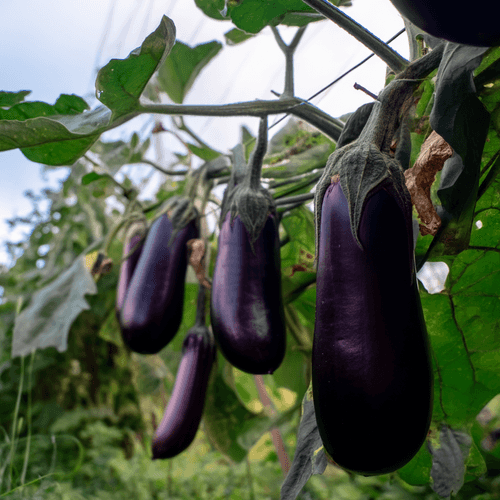
A close photo of eggplants

Overview

Overview before growing eggplants

Section titled “Overview before growing ”

Sunlight

At least 6-8 hours of direct sun per day in a very warm, sheltered spot.

Water

Around 1-1.5 inches (2.5-4 cm) of water per week, keeping soil evenly moist but never waterlogged.

Temperature

Warm-season plants that grow best around 70-85°F (21-29°C) and stall or suffer in cool conditions.

Spacing

Space plants 18-24 in (45-60 cm) apart in rows 30-36 in (75-90 cm) apart for good airflow and strong growth.

Cultivation time

Expect the first harvest about 65-80 days after transplanting hardened-off seedlings into warm soil, depending on the variety and climate.

Required climate

Eggplants prefer a long, hot, frost-free season with full sun, fertile, well-drained soil, and extra warmth from raised beds, dark mulch, or a greenhouse in cooler regions.

Plantation yield

Well-grown eggplants can give a steady supply of glossy fruits through mid to late summer, with each plant producing multiple harvests if picked regularly.

Pot cultivation

Choose a large, warm container of at least 5-10 gallons (20-40 L) with rich, free-draining mix, a sturdy stake or cage, full sun, and very consistent watering and feeding.

Growing requirements

What supplies do you need to grow eggplants ?

Section titled “What supplies do you need to grow ?”
  • Eggplant seeds or strong disease-free seedlings of suitable varieties
    Required
  • Fertile, well-drained garden soil or high-quality vegetable potting mix with compost
    Required
  • Balanced organic or synthetic fertilizer and extra high-potassium feed for fruiting
    Required
  • Organic mulch (straw, compost, or shredded leaves) to retain moisture and limit weeds
    Required
  • Black plastic, landscape fabric, or cloches to warm cool soils in spring
    Optional
  • Stakes, cages, or a small trellis to support heavy plants and fruits
    Optional
  • Row covers or insect mesh to protect seedlings from flea beetles and wind
    Optional
  • Drip irrigation, soaker hose, or a watering can for deep, targeted watering at the base
    Optional
Planting

How to plant eggplants ?

Section titled “How to plant ?”

Plantation calendar

JAN
FEB
MAR
APR
MAY
JUN
JUL
AUG
SEP
OCT
NOV
DEC

Best time to plant

Still possible to plant

Not recommended

Planting eggplants outside

  • 1Choose the warmest, sunniest, most sheltered part of your garden with fertile, well-drained soil that has fully warmed after all frost.
  • 2Loosen soil deeply and mix in plenty of compost and a balanced fertilizer, and lay black plastic or warm mulch if your climate is cool.
  • 3Harden off seedlings for about a week, then transplant them at 18-24 in (45-60 cm) apart in rows 30-36 in (75-90 cm) apart at the same depth they grew in their pots.
  • 4Firm soil gently around the root ball, water thoroughly to settle the plants, and install stakes or cages at planting time for support.
  • 5Mulch around each plant once the soil is warm to conserve moisture, keep roots cool, and reduce weed competition.
  • 6In windy or cooler areas, protect young plants with cloches, fleece, or row covers until nights are consistently mild.

Pro tip: Eggplants love heat but hate cold feet—wait for reliably warm soil and nights before planting, and use mulch, dark surfaces, or shelters to boost warmth and growth early in the season.

Planting eggplants inside

  • 1Select a large container of at least 5-10 gallons (20-40 L) with ample drainage and a strong stake or cage for each plant.
  • 2Fill the pot with a rich, free-draining vegetable mix blended with compost and slow-release fertilizer.
  • 3Transplant one sturdy seedling per container at the same or slightly deeper depth, firming the mix gently around the roots.
  • 4Water well after planting and position the pot in the sunniest, warmest spot you have, such as a south-facing wall, balcony, or greenhouse.
  • 5Tie the main stem to its support as it grows, and remove any very low leaves touching the soil to improve airflow at the base.
  • 6Check soil moisture frequently, especially in hot, dry weather, and move or rotate containers if needed so plants receive even light and warmth.

Pro tip: Container-grown eggplants thrive in extra warmth—dark pots, sheltered walls, and greenhouse corners all help, but you must water and feed them regularly to keep fruits glossy and tender instead of small and bitter.

Plant care

How to take care of eggplants ?

Section titled “How to take care of ?”

Watering

Water eggplants deeply and consistently, aiming for about 1-1.5 inches of water per week, and always watering at the base of the plants to keep foliage as dry as possible and reduce blossom end rot, fruit splitting, and fungal diseases linked to uneven moisture.

Fertilizing

Feed with a balanced fertilizer or organic vegetable feed a few weeks after transplanting, then switch to a low-nitrogen, higher-potassium fertilizer once plants begin flowering and setting fruit to support sturdy stems, glossy skins, and good flavor without excessive leafy growth.

Pruning

Remove any weak, damaged, or diseased leaves, pinch out small suckers low on the stem to improve airflow, and lightly thin crowded branches so light can reach developing fruits, while staking and tying plants so heavy fruit clusters do not bend or snap the stems.

Harvesting

How to harvest eggplants ?

Section titled “How to harvest ?”

Time

Most eggplant varieties are ready to harvest about 65-80 days after transplanting, with fruits ripening from mid-summer to early fall in warm climates.

Signs

Fruits are full-sized for the variety with smooth, glossy skin, rich even color, and feel firm but give slightly when pressed lightly with a thumb without leaving a deep dent.

Harvest eggplants using clean pruners or a sharp knife to cut the thick stem just above the calyx, leaving a short stalk attached so you do not tear the plant; pick fruits while skins are still shiny and seeds are small and pale, and harvest regularly to encourage fresh blooms and a longer, more productive season.

Problems & solutions

Common issues when growing eggplants

Section titled “Common issues when growing ”

Flea beetles

Tiny round holes speckling young leaves, slowing plant growth.

Protect seedlings with row covers until plants are larger, keep growth vigorous with regular watering and feeding, use mulch to reduce dust, and apply organic insect controls or trap crops if damage stays heavy.

Aphids and spider mites

Sticky leaves, curling tips, fine webbing, and yellow stippling on foliage.

Encourage beneficial insects, wash pests off with a firm spray of water, and use insecticidal soap or horticultural oil on the undersides of leaves to control heavy infestations before they weaken plants.

Blossom end rot and fruit splitting

Sunken, dark patches on the blossom end or cracked fruits after dry spells and heavy rain.

Maintain steady soil moisture with deep, regular watering and mulch, avoid damaging roots or over-fertilizing with nitrogen, and ensure calcium availability through balanced soil and gentle feeding practices.

Poor fruit set or small fruits

Plenty of flowers but few or tiny eggplants, often in cool or very hot weather.

Plant only in warm conditions, use covers for extra heat early in the season, keep plants well fed and watered without stress, and gently shake or tap plants during flowering to improve pollination in still or enclosed growing spaces.