

Skip to content

About carrots

How to grow carrots

Everything you need to know to grow productive, straight carrots at home, even in a small raised bed or deep pot.

Growing

60-80 days

Difficulty

Easy

Cost

$$$$$$

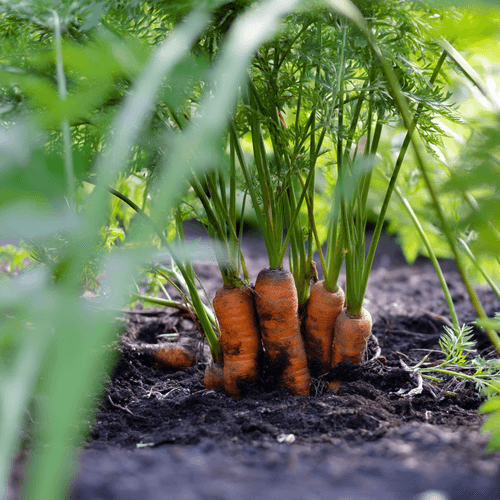
A close photo of carrots

Overview

Overview before growing carrots

Section titled “Overview before growing ”

Sunlight

At least 6-8 hours of direct sun per day in a cool, open bed.

Water

Around 1 inch (2.5 cm) of water per week, keeping soil evenly moist to prevent roots from cracking.

Temperature

Best growth in cool to mild weather around 55-75°F (13-24°C), avoiding intense summer heat.

Spacing

Thin seedlings to 1.5-2 in (4-5 cm) apart with rows 12-18 in (30-45 cm) apart or close bands in raised beds.

Cultivation time

Expect harvest 60-80 days after sowing, with baby carrots ready even earlier and main crops taking slightly longer in cool weather.

Required climate

Carrots prefer a sunny position with deep, loose, stone-free soil and cool to mild conditions, often grown in spring and autumn rather than the hottest part of summer.

Plantation yield

A well-sown, well-thinned carrot bed can provide many bunches of straight, sweet roots from a small space, ideal for repeat sowings through the season.

Pot cultivation

Use a deep container at least 10-12 in (25-30 cm) tall filled with light, sandy, stone-free mix, sow thinly, keep the surface evenly moist, and thin carefully for straight roots.

Growing requirements

What supplies do you need to grow carrots ?

Section titled “What supplies do you need to grow ?”
  • Carrot seeds of suitable early, maincrop, or baby varieties
    Required
  • Deep, loose, stone-free soil or a fine-textured vegetable compost for containers
    Required
  • Compost or low-nitrogen, higher-phosphorus and potassium fertilizer for root crops
    Required
  • Organic mulch (straw, grass clippings, or leaf mold) to keep moisture even and reduce weeds
    Required
  • Sand or fine grit to lighten heavy soils and improve drainage
    Optional
  • Deep raised bed or containers (at least 25-30 cm deep) for straight roots in poor soils
    Optional
  • Watering can with a fine rose or a gentle hose setting to avoid washing out seeds
    Optional
  • Row covers or fine mesh to protect from carrot fly and maintain surface moisture
    Optional
Planting

Plantation calendar

JAN
FEB
MAR
APR
MAY
JUN
JUL
AUG
SEP
OCT
NOV
DEC

Best time to plant

Still possible to plant

Not recommended

Planting carrots outside

  • 1Prepare a sunny bed by loosening soil 8-12 in (20-30 cm) deep and removing stones, clods, and roots so carrots can grow straight.
  • 2Rake the surface to a fine, level tilth and, if needed, mix in compost and a small amount of low-nitrogen fertilizer.
  • 3Draw shallow drills about 0.25-0.5 in (0.5-1 cm) deep, water the base, then sow seeds as thinly as you can along the row.
  • 4Cover lightly with fine soil or sifted compost, firm gently with the back of a rake, and water with a soft spray so you do not disturb seeds.
  • 5Keep the top layer of soil evenly moist until germination, using light, frequent watering or a thin mulch to prevent crusting.
  • 6Once seedlings are a few inches tall, thin them in stages until the final spacing is about 1.5-2 in (4-5 cm) between plants.

Pro tip: Carrots germinate slowly and dislike crusted, dry soil—sow shallowly in a fine seedbed, keep the surface steadily moist, and thin carefully for straight, full-sized roots.

Planting carrots inside

  • 1Choose a deep container (at least 25-30 cm) with good drainage and fill it with a light, stone-free vegetable mix or sandy compost.
  • 2Sow seeds thinly across the surface in rows or small blocks, covering them with about 0.25 in (0.5 cm) of fine mix and firming gently.
  • 3Water with a fine rose so the surface is moist but not waterlogged, and place the container in a bright, cool spot with several hours of sun.
  • 4Keep the top layer evenly moist during the long germination period, shading lightly in very hot weather if needed.
  • 5Thin seedlings gradually as they grow, aiming for 1.5-2 in (4-5 cm) between plants so each carrot has room to develop.
  • 6Rotate or move containers so plants receive even light and watch moisture closely, as pots dry out faster than open ground.

Pro tip: For container-grown carrots, depth and soil texture matter more than pot width—prioritize a deep, loose, stone-free mix and very even watering to avoid short, forked, or cracked roots.

Plant care

How to take care of carrots ?

Section titled “How to take care of ?”

Watering

Water deeply but gently, providing about 1 inch of water per week and focusing on keeping moisture steady rather than alternating between very dry and very wet soil, which can cause roots to split or become woody.

Fertilizing

Feed carrots lightly by incorporating compost or a low-nitrogen, higher-phosphorus and potassium fertilizer before sowing, then, if needed, side-dress modestly mid-season, avoiding rich, fresh manure or heavy nitrogen that leads to lush tops and forked roots.

Pruning

Thin crowded seedlings in one or two rounds as they grow to reach the final spacing, removing weak or excess plants and any heavily yellowed foliage so the remaining carrots have enough space, light, and airflow to develop straight, uniform roots.

Harvesting

Time

Most carrot varieties are ready to harvest about 60-80 days after sowing, with baby carrots available sooner and maincrop roots often taking 12-16 weeks in cooler conditions.

Signs

Carrot tops are well developed, the shoulders of the roots are visible at the soil surface and about 0.75-1 in (2-2.5 cm) wide, and the roots feel firm and fully colored for the variety.

Loosen soil alongside the row with a fork or hand tool, then gently pull carrots by their tops, twisting slightly if needed so roots slide out cleanly; harvest as soon as they reach usable size for the best flavor, cut off the foliage after lifting, and store sound roots in cool, dark, humid conditions.

Problems & solutions

Common issues when growing carrots

Section titled “Common issues when growing ”

Carrot fly (carrot root maggot)

Rusty tunnels and brown, damaged patches inside roots, often causing stunted, bitter carrots.

Cover carrot beds with fine mesh from sowing, avoid bruising foliage and thinning in the heat of the day, rotate crops each year, and harvest promptly; in affected areas, grow shorter or fast-maturing varieties in high, enclosed beds or containers.

Forked or misshapen roots

Carrots grow short, forked, or twisted instead of straight and tapered.

Prepare deep, loose, stone-free soil, avoid fresh manure and very high nitrogen levels, sow thinly and thin seedlings properly so roots have room to grow without hitting clods, stones, or other carrots.

Cracked or split carrots

Roots develop long splits or cracks, sometimes twisting or becoming rough.

Maintain even soil moisture with mulching and regular, moderate watering, avoid long dry spells followed by heavy soaking, and harvest mature carrots promptly rather than leaving them in the ground through extreme wet–dry swings.

Poor germination and patchy rows

Few seedlings emerge, with gaps and uneven stands across the bed.

Sow in fine, moist soil, cover seeds very lightly, keep the surface consistently damp until germination, protect from crusting sun and wind with row cover or a light mulch, and consider using pelleted seed or mixing seed with sand for more even sowing.