

Skip to content

About bell-peppers

How to grow bell-peppers

Everything you need to know to grow productive bell peppers at home, even in a small garden bed or sunny patio pot.

Growing

70-90 days

Difficulty

Moderate

Cost

$$$$$$

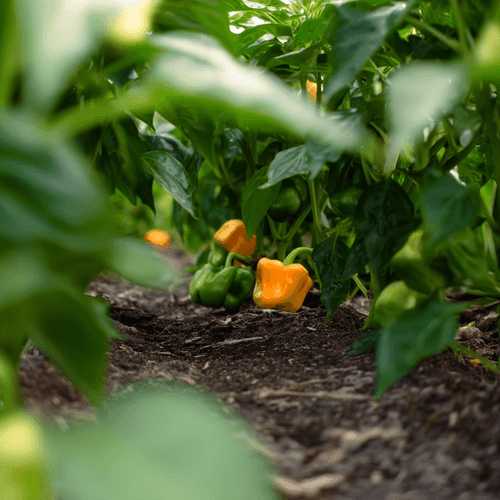
A close photo of bell-peppers

Overview

Overview before growing bell-peppers

Section titled “Overview before growing ”

Sunlight

At least 6-8 hours of direct sun per day in a warm, sheltered spot.

Water

Consistent moisture with about 1-1.5 inches (2.5-4 cm) of water per week, more during hot, dry spells.

Temperature

Warm-season plants that grow best between about 70-85°F (21-29°C) and are very sensitive to frost and cold nights.

Spacing

Space plants 18-24 in (45-60 cm) apart in rows 24-36 in (60-90 cm) apart for good airflow and light.

Cultivation time

Expect your first harvest about 70-90 days after transplanting sturdy seedlings into warm soil, depending on variety and growing conditions.

Required climate

Bell peppers prefer a long, warm, frost-free growing season with full sun, fertile, well-drained soil, and steady, even moisture.

Plantation yield

In good conditions each plant can produce several medium to large peppers, and a small bed can provide regular pickings throughout the season.

Pot cultivation

Choose a compact variety in a 5-10 gallon (20-40 L) container filled with rich, free-draining mix, set in full sun, with consistent watering, feeding, and a stake or cage for support.

Growing requirements

What supplies do you need to grow bell-peppers ?

Section titled “What supplies do you need to grow ?”
  • Bell pepper seeds or healthy seedlings of suitable varieties
    Required
  • Fertile, well-draining garden soil or high-quality vegetable potting mix
    Required
  • Balanced vegetable fertilizer (such as 10-10-10) or organic equivalent
    Required
  • Organic mulch (straw, shredded leaves, or compost) to conserve soil moisture
    Required
  • Black plastic or landscape fabric to warm cool soils in spring
    Optional
  • Stakes, cages, or a small trellis to support heavily loaded plants
    Optional
  • Row covers or cloches for early-season frost and wind protection
    Optional
  • Watering can, hose with soft spray, or drip system for steady irrigation
    Optional
Planting

How to plant bell-peppers ?

Section titled “How to plant ?”

Plantation calendar

JAN
FEB
MAR
APR
MAY
JUN
JUL
AUG
SEP
OCT
NOV
DEC

Best time to plant

Still possible to plant

Not recommended

Planting bell-peppers outside

  • 1Choose the sunniest, warmest, and most sheltered part of your garden with fertile, well-drained soil.
  • 2Wait until all danger of frost has passed and soil has warmed to at least about 65°F (18°C), then harden off seedlings for a week.
  • 3Mix compost and a balanced fertilizer into the top layer of soil, and optionally lay black plastic to help warm and dry heavy soils.
  • 4Plant seedlings slightly deeper than they were in their pots, firming soil around the root ball and spacing plants 18-24 in (45-60 cm) apart.
  • 5Water thoroughly after planting and apply mulch around each plant, keeping it a little away from the stems.
  • 6Install stakes or cages soon after planting so you can tie in stems as plants grow and fruits develop.

Pro tip: Bell peppers hate cold, so do not rush planting; warm soil, row covers, and good shelter at the start of the season will reward you with stronger plants and earlier harvests.

Planting bell-peppers inside

  • 1Select a compact bell pepper variety and a container of at least 5-10 gallons (20-40 L) with several drainage holes.
  • 2Fill the pot with a high-quality, free-draining vegetable mix enriched with compost and a slow-release fertilizer.
  • 3Transplant one seedling per pot, setting it at the same depth or slightly deeper than in its nursery pot and firming the mix gently.
  • 4Water well to settle the mix, then place the container in a spot with 6-8 hours of direct sun and good warmth, such as a patio or balcony.
  • 5Add a stake or small cage at planting time and tie stems loosely as they grow to prevent branches snapping under the weight of fruit.
  • 6Check moisture frequently, as pots dry quickly, and rotate containers occasionally so all sides of the plant receive even light.

Pro tip: For container-grown bell peppers, consistent warmth, regular feeding, and even moisture are key—never let pots dry out completely or sit waterlogged, especially during flowering and fruit set.

Plant care

How to take care of bell-peppers ?

Section titled “How to take care of ?”

Watering

Water deeply and consistently, providing about 1-1.5 inches of water per week, focusing irrigation at the base of the plants to keep leaves dry and reduce the risk of fungal disease and blossom end rot caused by uneven soil moisture.

Fertilizing

Feed with a balanced fertilizer or organic vegetable feed every 2-3 weeks during active growth, then switch to a lower-nitrogen, higher-potassium fertilizer once plants start flowering and setting fruit to support sturdy stems and abundant peppers.

Pruning

Remove weak or damaged side shoots, nip off any leaves touching the soil, and lightly thin very dense foliage if needed for airflow, while staking and tying branches so that heavy clusters of peppers do not bend or break the stems.

Harvesting

How to harvest bell-peppers ?

Section titled “How to harvest ?”

Time

Most bell pepper varieties are ready to pick about 60-90 days after transplanting, with green peppers maturing first and fully colored peppers taking a few weeks longer.

Signs

Fruits are firm, full-sized for the variety, with smooth, glossy skin and a solid green or fully developed red, yellow, orange, or other final color, and feel slightly springy to the touch.

Harvest bell peppers by cutting the stem with clean pruners or a knife, leaving a short stalk attached to avoid breaking branches; pick regularly when fruits reach the desired size and color to encourage continuous flowering and further sets of peppers.

Problems & solutions

Common issues when growing bell-peppers

Section titled “Common issues when growing ”

Blossom end rot

Sunken, dark, leathery patch at the blossom end of peppers.

Maintain consistent soil moisture with regular deep watering and mulch, avoid damaging roots with heavy cultivation, and do not over-fertilize with nitrogen so plants can take up enough calcium to build healthy fruit walls.

Aphids

Sticky honeydew, curled leaves, and clusters of small insects on new growth.

Encourage ladybirds and other beneficial insects, wash small colonies off with a strong jet of water, and use insecticidal soap or horticultural oil on heavily infested shoots to protect young plants and flowers.

Sunscald on fruit

White, pale, or papery patches on the side of fruits exposed to intense sun.

Avoid over-pruning foliage, keep plants well watered so leaves do not drop in hot weather, and use shade cloth or neighboring plants to provide light dappled shade during extreme heat waves.

Leaf spots and wilts

Small dark spots with yellow halos on leaves, ragged foliage, or sudden wilting of stems.

Rotate crops away from other nightshades, avoid overhead watering, remove and destroy badly affected leaves, and use resistant varieties and approved copper or organic treatments where bacterial or fungal diseases are persistent.