

Skip to content

About bananas

How to grow bananas

Everything you need to know to grow productive banana plants at home, even in a small garden or large pot.

Growing

9-18 months

Difficulty

Moderate

Cost

$$$$$$

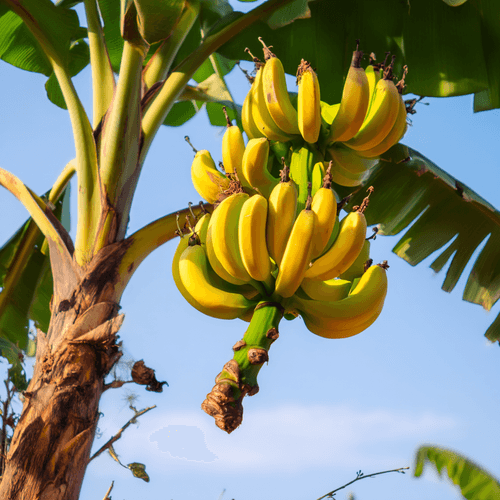
A close photo of bananas

Overview

Overview before growing bananas

Section titled “Overview before growing ”

Sunlight

At least 6-8 hours of bright, direct sun each day in a warm, sheltered spot.

Water

Keep soil consistently moist with deep watering, avoiding waterlogging or long dry spells.

Temperature

Best growth in frost-free climates between about 75-86°F (24-30°C).

Spacing

Space plants 6-10 ft (2-3 m) apart so each clump has room to spread.

Cultivation time

Expect the first bunch 9-18 months after planting a healthy sucker or young plant, depending on warmth and care.

Required climate

Bananas prefer a tropical to subtropical, frost-free climate with high humidity, full sun, and rich, well-drained soil.

Plantation yield

A single well-grown plant can produce one large bunch with 10-25 kg of bananas, and new suckers keep the clump fruiting over time.

Pot cultivation

Choose a dwarf variety in a large, heavy container with rich, free-draining mix, full sun, regular feeding, and protection from cold.

Growing requirements

What supplies do you need to grow bananas ?

Section titled “What supplies do you need to grow ?”
  • Healthy banana sucker or tissue-cultured plant of a suitable variety
    Required
  • Rich, well-drained loamy soil or high-quality potting mix with compost
    Required
  • Balanced slow-release fertilizer and extra potassium for fruiting
    Required
  • Organic mulch (compost, straw, or bark) to conserve moisture
    Required
  • Large container (40–60 L or more) with drainage holes for dwarf bananas
    Optional
  • Sturdy stake or support to prevent plants toppling in strong winds
    Optional
  • pH test kit to keep soil slightly acidic to neutral (around 5.5–7.0)
    Optional
  • Organic pest and disease controls for borers, aphids, and leaf spots
    Optional
Planting

Plantation calendar

JAN
FEB
MAR
APR
MAY
JUN
JUL
AUG
SEP
OCT
NOV
DEC

Best time to plant

Still possible to plant

Not recommended

Planting bananas outside

  • 1Choose a sunny, frost-free, wind-sheltered spot with deep, rich, well-drained soil.
  • 2Dig a wide planting hole and mix in plenty of compost or well-rotted manure.
  • 3Set the sucker or plant so the base of the pseudostem sits at soil level, spreading roots gently.
  • 4Backfill with enriched soil, firm lightly, and water deeply to settle around the roots.
  • 5Mulch thickly around the plant to conserve moisture, keeping mulch away from the pseudostem.
  • 6If exposed to strong winds, stake the plant or provide a windbreak to prevent it from toppling.

Pro tip: Plant once soil is warm and danger of frost has passed, and always keep bananas out of cold, low-lying, or waterlogged spots.

Planting bananas inside

  • 1Select a dwarf banana variety and a large, heavy pot with several drainage holes.
  • 2Fill the container with a rich, free-draining potting mix blended with compost.
  • 3Position the plant in the center at the same depth it grew in its nursery pot.
  • 4Backfill around the roots, firm the mix gently, and water thoroughly to eliminate air pockets.
  • 5Place the pot in the brightest, warmest spot you have, turning it regularly for even light.
  • 6Maintain high humidity with regular misting or a pebble tray, especially in dry indoor air.

Pro tip: In cool climates, grow bananas in containers that can be moved indoors or under cover whenever temperatures threaten to drop below about 50°F (10°C).

Plant care

How to take care of bananas ?

Section titled “How to take care of ?”

Watering

Water generously and regularly so the soil stays consistently moist but never soggy, increasing frequency in hot, windy weather and reducing in cooler periods while avoiding complete drying out.

Fertilizing

Feed bananas often during the growing season with a balanced, slow-release or liquid fertilizer and extra potassium, applying little and often to support the plant’s heavy leafy growth and fruiting.

Pruning

Remove dead or tattered leaves and cut down each spent pseudostem after harvest, leaving 1-2 strong suckers per clump so new stems can replace the old and keep the mat productive.

Harvesting

Time

Most banana varieties are ready to harvest around 9-18 months after planting, and 3-4 months after the flower emerges and hands of fruit have formed.

Signs

Fruit fingers look plump with rounded edges, skins turn from dark to lighter green and may show the first hint of yellow, and the flower end snaps off easily when bent.

Harvest bananas while still mostly green by cutting the whole bunch or hand with a sharp knife or saw, supporting its weight as you cut so it does not tear or bruise; hang the bunch in a cool, shaded, airy place and allow fruits to ripen off the plant for the best flavor and to avoid damage from birds, bats, or sun.

Problems & solutions

Common issues when growing bananas

Section titled “Common issues when growing ”

Leaf spot (Sigatoka and similar diseases)

Brown or black streaks and spots on leaves that merge and cause yellowing.

Remove and destroy badly affected leaves, improve spacing and airflow, avoid overhead watering in the evening, keep plants well fed and mulched, and use approved fungicidal or organic sprays in areas where leaf spots are persistent.

Banana weevil and borers

Weak, stunted plants, tunneling damage in the pseudostem and rhizome, and plants toppling over.

Use clean, healthy planting material, keep the base of plants free of trash and old pseudostems, trap adults with cut pieces of stem, and apply targeted biological or other recommended controls if damage is severe.

Aphids and sap-sucking pests

Clusters of small insects on young leaves and flower stalks, sticky honeydew, and sooty mold.

Encourage beneficial insects, wash small infestations off with water, and use insecticidal soap or horticultural oil on heavily infested areas to reduce pest numbers and the risk of virus spread.