

Skip to content

About apricots

How to grow apricots

Everything you need to know to grow productive apricot trees at home, from site selection and planting to care, pruning, and harvesting.

Growing

3-4 years

Difficulty

Moderate

Cost

$$$$$$

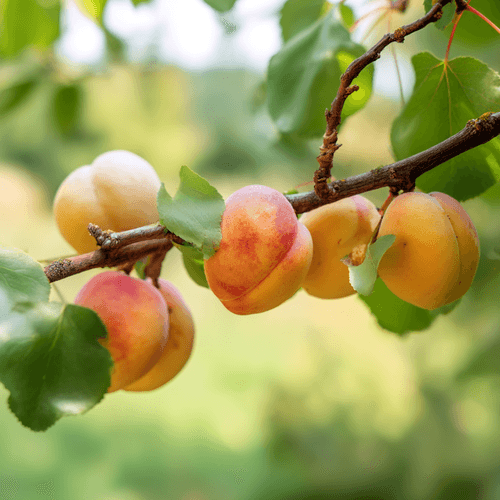
A close photo of apricots

Overview

Overview before growing apricots

Section titled “Overview before growing ”

Sunlight

Full sun with at least 6-8 hours of direct light per day.

Water

Regular deep watering, especially in dry periods, keeping soil moist but not waterlogged.

Temperature

Best growth in warm, temperate climates with mild winters and frost-free springs.

Spacing

Plant trees 12-18 ft (3.5-5.5 m) apart to ensure good airflow and light penetration.

Cultivation time

Expect your first significant harvest 3-4 years after planting a young grafted apricot tree.

Required climate

Apricots prefer a warm, dry, temperate climate with cold winters for chilling and dry weather during flowering and ripening.

Plantation yield

A mature apricot tree can produce many kilograms of fruit per season when properly pruned and cared for.

Pot cultivation

Dwarf apricot varieties can be grown in large containers with rich, free-draining soil, full sun, regular feeding, and careful pruning.

Growing requirements

What supplies do you need to grow apricots ?

Section titled “What supplies do you need to grow ?”
  • Young grafted apricot tree on dwarf rootstock
    Required
  • Well-drained loamy soil or citrus/fruit potting mix
    Required
  • Balanced fruit tree fertilizer (NPK 10-10-10)
    Required
  • Organic mulch (compost, bark chips, straw)
    Required
  • Sturdy support stake and ties for young trees
    Optional
  • pH test kit (ideal soil pH 6.5-7.5)
    Optional
  • Pruning shears for annual winter maintenance
    Optional
  • Frost protection cloth for early spring blooms
    Optional
Planting

Plantation calendar

JAN
FEB
MAR
APR
MAY
JUN
JUL
AUG
SEP
OCT
NOV
DEC

Best time to plant

Still possible to plant

Not recommended

Planting apricots outside

  • 1Choose sunny south/west-facing wall or sheltered spot with excellent drainage.
  • 2Dig wide hole twice rootball width, mix in compost and aged manure.
  • 3Position graft union 2-4 inches above soil level, spread roots widely.
  • 4Backfill firmly, create watering basin, water deeply to settle soil.
  • 5Apply 3-inch mulch layer keeping it away from trunk base.
  • 6Stake young trees in exposed/windy locations with soft ties.

Pro tip: Plant dormant bare-root trees in late winter; protect early spring flowers from frost damage.

Planting apricots inside

  • 1Select dwarf/patio apricot variety and 45cm+ container with drainage.
  • 2Fill with loam-based or citrus/fruit potting mix.
  • 3Plant with graft union above soil surface, firm gently around roots.
  • 4Water thoroughly and position in hottest, sunniest sheltered spot.
  • 5Rotate container regularly for even light exposure all around.
  • 6Maintain consistent moisture without waterlogging during establishment.

Pro tip: Container apricots need frequent summer watering; repot every 2-3 years into fresh compost.

Plant care

How to take care of apricots ?

Section titled “How to take care of ?”

Watering

Deep weekly watering first 2 years (1-2 inches), then reduce; water at base to keep foliage dry.

Fertilizing

Apply balanced NPK 10-10-10 in early spring; light potassium boost post-harvest for next year's fruit.

Pruning

Late winter: train to open vase shape removing dead/crossing branches; thin crowded fruit when grape-sized.

Harvesting

How to harvest apricots ?

Section titled “How to harvest ?”

Time

Early to mid-summer (June-July), 2-4 years after planting when trees mature.

Signs

Fruits turn full golden-orange, slightly soft, separate easily from spur when ready.

Harvest on dry days by gently twisting ripe fruit off spurs with short stalk; handle carefully to avoid bruising.

Problems & solutions

Common issues when growing apricots

Section titled “Common issues when growing ”

Brown rot

Brown rotting patches on fruit, split/cracked apricots.

Remove infected fruit immediately, ensure good airflow through pruning, apply copper fungicide at bud break.

Silver leaf disease

Silvered leaves, dieback, brown streaks in cut wood.

Prune only in summer (not winter), sterilize tools between cuts, remove/destroy infected branches.

Aphids and caterpillars

Curled leaves, sticky honeydew, holes in young leaves.

Encourage ladybirds, use insecticidal soap sprays, install codling moth traps for caterpillar control.

Spring frost damage

Blighted blossoms, no fruit set after cold snaps.

Plant against warm south-facing walls, use fleece covers during forecast frosts, choose late-flowering varieties.